





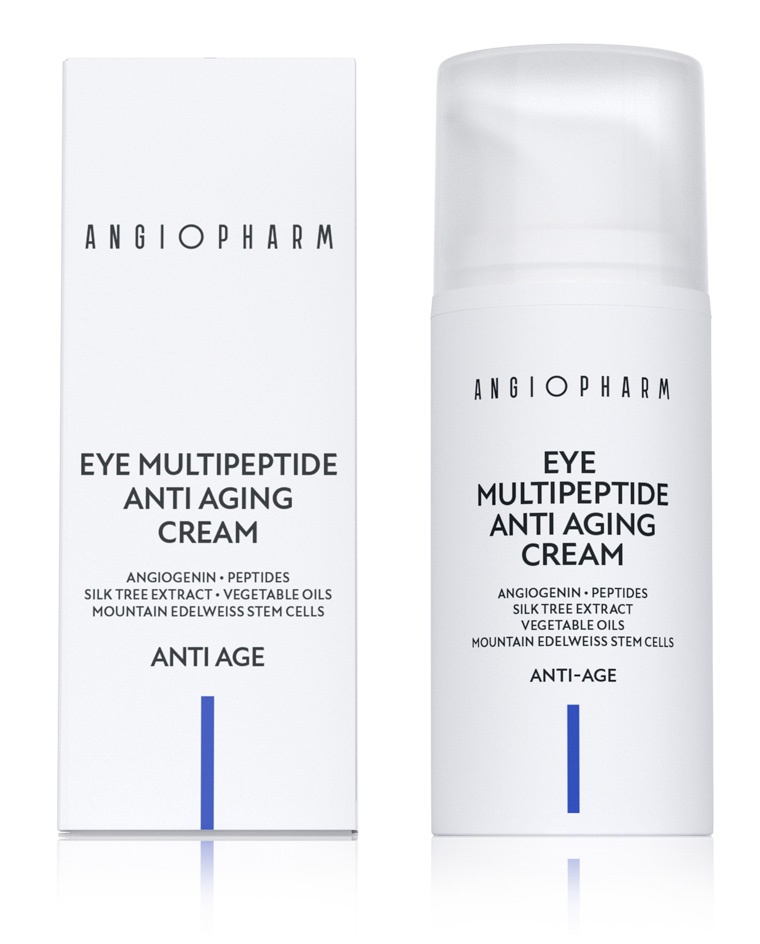
Мультипептидный Омолаживающий Крем
Ingredients overview
Highlights
Key Ingredients
Other Ingredients
Skim through
AngioPharm Мультипептидный Омолаживающий КремIngredients explained
Good old water, aka H2O. The most common skincare ingredient of all. You can usually find it right in the very first spot of the ingredient list, meaning it’s the biggest thing out of all the stuff that makes up the product.
It’s mainly a solvent for ingredients that do not like to dissolve in oils but rather in water.
Once inside the skin, it hydrates, but not from the outside - putting pure water on the skin (hello long baths!) is drying.
One more thing: the water used in cosmetics is purified and deionized (it means that almost all of the mineral ions inside it is removed). Like this, the products can stay more stable over time.
Unless you live under a rock you must have heard about shea butter. It's probably the most hyped up natural butter in skincare today. It comes from the seeds of African Shea or Karite Trees and used as a magic moisturizer and emollient.
But it's not only a simple emollient, it regenerates and soothes the skin, protects it from external factors (such as UV rays or wind) and is also rich in antioxidants (among others vitamin A, E, F, quercetin and epigallocatechin gallate). If you are looking for rich emollient benefits + more, shea is hard to beat.
 We don't have description for this ingredient yet.
The golden yellow oil coming from the Macadamia nut, a native Australian nut. Similar to other plant oils, it's loaded with emollient and nourishing fatty acids. It's a high oleic acid oil (50-67% oleic acid and only 0-5% linoleic acid) that makes it very emollient and ideal for dry skin types.
Its unique property is that it contains high amounts of a rare fatty acid called palmitoleic acid (12-25%) that give Macadamia oil a "cushiony" feel. It's also easily absorbed and makes the skin soft and supple.
A super common emollient that makes your skin feel nice and smooth. It comes from coconut oil and glycerin, it’s light-textured, clear, odorless and non-greasy. It’s a nice ingredient that just feels good on the skin, is super well tolerated by every skin type and easy to formulate with. No wonder it’s popular.
- A natural moisturizer that’s also in our skin
- A super common, safe, effective and cheap molecule used for more than 50 years
- Not only a simple moisturizer but knows much more: keeps the skin lipids between our skin cells in a healthy (liquid crystal) state, protects against irritation, helps to restore barrier
- Effective from as low as 3% with even more benefits for dry skin at higher concentrations up to 20-40%
- High-glycerin moisturizers are awesome for treating severely dry skin
A big molecule from repeated subunits that is used to form gel-like textures and create a film on the skin.
There is definitely some craze going on for coconut oil both in the healthy eating space (often claimed to be the healthiest oil to cook with but this is a topic for another site) and in the skin and hair care space.
We will talk here about the latter two and see why we might want to smear it all over ourselves. Chemically speaking, coconut oil has a unique fatty acid profile. Unlike many plant oils that mostly contain unsaturated fatty acids (fatty acids with double bonds and kinky structure such as linoleic or oleic), coconut oil is mostly saturated (fatty acids with single bonds only) and its most important fatty acid is Lauric Acid (about 50%). Saturated fatty acids have a linear structure that can stack nice and tight and hence they are normally solid at room temperature. Coconut oil melts around 25 °C so it is solid in the tub but melts on contact with the skin.
The saturated nature of coconut oil also means that it is a heavy-duty-oil ideal for dry skin types. A double-blind research confirmed that extra virgin coconut oil is as effective in treating xerosis (aka very dry skin) as mineral oil. Another study found that coconut oil is more effective than mineral oil in treating mild to moderate atopic dermatitis (aka eczema) in children.
So when it comes to dry skin, coconut oil is a goodie, no question there. The question is if it is good or bad for acne-prone skin. Its main fatty acid, Lauric Acid has some research showing that it is a promising ingredient against evil acne-causing bacteria, P. acnes but at the same time, both Lauric Acid and coconut oil have a very high comedogenic rating (4 out of 5). Though comedogenic ratings are not very reliable, anecdotal evidence (i.e. people commenting in forums) shows that people have mixed experiences. While some claim that it worked wonders on their acne others say that it gave them serious blackheads and zits. Try it at your own risk.
As for hair care, coconut oil has pretty solid research showing that it can penetrate into the hair very well (better than mineral oil and sunflower oil) and it can prevent hair protein loss as well as combing damage. If you have problems with damaged hair, split ends, coconut oil is worth trying as a pre- or/and post-wash treatment. Labmuffin has an awesome blogpost explaining in more detail why coconut oil is good for your hair.
A couple of other things worth mentioning: coconut oil might help with wound healing (promising animal study), it has some antifungal activity (against dermatophytes that cause the thing known as ringworm) and it also works as an insect repellent against black flies.
Overall, coconut oil is definitely a goodie for the hair and dry skin. If that warrants for the magic oil status it enjoys, we don't know.
A plant stem cell extract derived from the famous mountain flower, Edelweiss. It goes by the trade name Majestem and the manufacturer claims that it has a visible lifting action on the neck and face.
In their in-vivo (made on real people) tests, the sagging skin on the neck was tightened by -10.6% up to -56% in three weeks. After six weeks, the cheeks were also lifted and the crow’s feet wrinkles were smoothed out (surface -11% up to -75%).
Apart from manufacturer claims, edelweiss is traditionally known for and used for its soothing properties. We found a 2012 study confirming that edelweiss cell culture extract contains the active called leontopodic acid that seems to be responsible for the plant's anti-inflammatory properties.
Aloe Vera is one of today’s magic plants. It does have some very nice properties indeed, though famous dermatologist Leslie Baumann warns us in her book that most of the evidence is anecdotal and the plant might be a bit overhyped.
What research does confirm about Aloe is that it’s a great moisturizer and has several anti-inflammatory (among others contains salicylates, polysaccharides, magnesium lactate and C-glucosyl chromone) as well as some antibacterial components. It also helps wound healing and skin regeneration in general. All in all definitely a goodie.
A skin protecting ingredient obtained by enzymatic synthesis from natural sugars (sucrose and maltose). It's claimed to be a bio-selective substrate that protects and stimulates the beneficial microbial skin flora without doing the same with pathogens and undesirable flora. It also stimulates the antimicrobial peptide release by keratinocytes (skin cells).
A sugar beet-derived amino acid derivative with nice skin protection and moisturization properties. Betaine's special thing is being an osmolyte, a molecule that helps to control cell-water balance. It is also a natural osmoprotectant, meaning that it attracts water away from the protein surface and thus protects them from denaturation and increases their thermodynamic stability.
It also gives sensorial benefits to the formula and when used in cleansers, it helps to make them milder and gentler.
It’s the most commonly used version of pure vitamin E in cosmetics. You can read all about the pure form here. This one is the so-called esterified version.
According to famous dermatologist, Leslie Baumann while tocopheryl acetate is more stable and has a longer shelf life, it’s also more poorly absorbed by the skin and may not have the same awesome photoprotective effects as pure Vit E.
An easy-to-formulate, commonly used, nice to have ingredient that’s also called pro-vitamin B5. As you might guess from the “pro” part, it’s a precursor to vitamin B5 (whose fancy name is pantothenic acid).
Its main job in skincare products is to moisturise the skin. It’s a humectant meaning that it can help the skin to attract water and then hold onto it. There is also research showing that panthenol can help our skin to produce more lovely lipids that are important for a strong and healthy skin barrier.
Another great thing about panthenol is that it has anti-inflammatory and skin protecting abilities. A study shows that it can reduce the irritation caused by less-nice other ingredients (e.g. fragrance, preservatives or chemical sunscreens) in the product.
Research also shows that it might be useful for wound healing as it promotes fibroblast (nice type of cells in our skin that produce skin-firming collagen) proliferation.
If that wasn’t enough panthenol is also useful in nail and hair care products. A study shows that a nail treatment liquide with 2% panthenol could effectively get into the nail and significantly increase the hydration of it.
As for the hair the hydration effect is also true there. Panthenol might make your hair softer, more elastic and helps to comb your hair more easily.
We don't have description for this ingredient yet.
Titanium Dioxide is one of the two members of the elite sunscreen group called physical sunscreens (or inorganic sunscreens if you’re a science geek and want to be precise).
Traditionally, UV-filters are categorized as either chemical or physical. The big difference is supposed to be that chemical agents absorb UV-light while physical agents reflect it like a bunch of mini umbrellas on top of the skin. While this categorization is easy and logical it turns out it's not true. A recent, 2016 study shows that inorganic sunscreens work mostly by absorption, just like chemical filters, and only a little bit by reflection (they do reflect the light in the visible spectrum, but mostly absorb in the UV spectrum).
Anyway, it doesn't matter if it reflects or absorbs, Titanium Dioxide is a pretty awesome sunscreen agent for two main reasons: it gives a nice broad spectrum coverage and it's highly stable. Its protection is very good between 290 - 350 nm (UVB and UVA II range), and less good at 350-400 nm (UVA I) range. Regular sized Titanium Dioxide also has a great safety profile, it's non-irritating and is pretty much free from any health concerns (like estrogenic effect worries with some chemical filters).
The disadvantage of Titanium Dioxide is that it's not cosmetically elegant, meaning it's a white, "unspreadable" mess. Sunscreens containing Titanium Dioxide are often hard to spread on the skin and they leave a disturbing whitish tint. The cosmetic industry is, of course, really trying to solve this problem and the best solution so far is using nanoparticles. The itsy-bitsy Nano-sized particles improve both spreadability and reduce the whitish tint a lot, but unfortunately, it also introduces new health concerns.
The main concern with nanoparticles is that they are so tiny that they are absorbed into the skin more than we want them (ideally sunscreen should remain on the surface of the skin). Once absorbed they might form unwanted complexes with proteins and they might promote the formation of evil free radicals. But do not panic, these are concerns under investigation. A 2009 review article about the safety of nanoparticles summarizes this, "to date, in-vivo and in-vitro studies have not demonstrated percutaneous penetration of nanosized particles in titanium dioxide and zinc oxide sunscreens". The English translation is, so far it looks like sunscreens with nanoparticles do stay on the surface of the skin where they should be.
All in all, Titanium Dioxide is a famous sunscreen agent and for good reason, it gives broad spectrum UV protection (best at UVB and UVA II), it's highly stable, and it has a good safety profile. It's definitely one of the best UV-filter agents we have today, especially in the US where new-generation Tinosorb filters are not (yet) approved.
We don't have description for this ingredient yet.
We don't have description for this ingredient yet.
We don't have description for this ingredient yet.
We don't have description for this ingredient yet.
Biosaccharide Gum-1 is a pretty interesting kind of sugar ingredient that is created from sorbitol via bacterial fermentation.
According to the manufacturer it’s a “S.M.A.R.T.” sugar: it has Soothing, Moisturizing, Anti-aging, Restructuring and Touch properties. Let’s look at them quickly one by one.
Soothing: the manufacturer tested out the soothing effect in vivo (meaning on humans that is always a good thing!) by measuring how 3% Biosaccharide Gum-1 decreased the tingling sensation caused by 10% lactic acid. The result was good: the tingling was decreased by 47%.
Moisturizing: Compared to famous hyaluronic acid, it turns out that the two are great together. HA has a quicker effect and provides more instant hydration (much more hydration was measured after 1h of application), while our nice sugar has a somewhat delayed effect demonstrating stronger hydration after 3h of application. After 8 hours both had similar moisturizing effect.
Anti-aging: According to ex-vivo tests (meaning not on humans, so do not trust it too much) Biosaccharide Gum-1 can stimulate a protein in our skin called sirtuin-1. This is supposed to help our skin cells to live longer, and function better.
Resurfacing: The sirtuin-1 stimulation also results in quicker cell renewal - something that happens anyway but slows down as we age. And the quicker cell renewal is good because it helps the regeneration of the barrier function. That is especially nice for fragile, sensitive skin.
Touch: our fermented sugar is not only good to the skin, but it also feels great on the skin. It gives a nice “soft touch” feeling and makes the products pleasant to use.
The bottom line is that the above info is from the manufacturer (and we could not find any relevant independent research) so obviously take it with a grain of salt. But Biosaccharide Gum-1 does look as an interesting and promising ingredient that’s why it earned our goodie rating.
- It’s the second most researched AHA after glycolic acid
- It gently lifts off dead skin cells to reveal newer, fresher, smoother skin
- It also has amazing skin hydrating properties
- In higher concentration (10% and up) it improves skin firmness, thickness and wrinkles
- Choose a product where you know the concentration and pH value because these two greatly influence effectiveness
- Don’t forget to use your sunscreen (in any case but especially so next to an AHA product)
It’s pretty much the current IT-preservative. It’s safe and gentle, but even more importantly, it’s not a feared-by-everyone-mostly-without-scientific-reason paraben.
It’s not something new: it was introduced around 1950 and today it can be used up to 1% worldwide. It can be found in nature - in green tea - but the version used in cosmetics is synthetic.
Other than having a good safety profile and being quite gentle to the skin it has some other advantages too. It can be used in many types of formulations as it has great thermal stability (can be heated up to 85°C) and works on a wide range of pH levels (ph 3-10).
It’s often used together with ethylhexylglycerin as it nicely improves the preservative activity of phenoxyethanol.
A very common ingredient that can be found in all cell membranes. In cosmetics it's quite the multi-tasker: it's an emollient and water-binding ingredient but it's also an emulsifier and can be used for stabilization purposes. It's also often used to create liposomes.
A form of skincare superstar, Vitamin C. If you do not know, what the big deal about Vitamin C is, click here and read all about it, we will wait here for you.
So now you know that pure vitamin C (aka ascorbic acid, AA) is really unstable and hard to formulate so the cosmetics industry is coming up with a bunch of derivatives to solve the problem and Magnesium Ascorbyl Phosphate (or MAP) is one of them.
MAP does solve the stability problem: it's stable up to pH 7, so far so good. What is not so good is that, as the great review study about vitamin C derivatives in the Journal of Cosmetic Dermatology writes, MAP is "at very best, poorly absorbed in comparison to AA."
Moreover, derivatives not only have to be absorbed into the skin, they also have to be converted into pure AA. The good news is that in-vitro data shows that MAP does convert, but the bad news is we do not really know if the same is true on real, living human skin. Even if it does, we don't know how good the conversion rate is (but to be fair the same is true for all other derivatives).
Regarding the three magic abilities of pure vitamin C (antioxidant, collagen booster, skin brightener), there is no published data about MAP's antioxidant or photoprotection capabilities. We have better news about the other two things: in-vitro data shows that MAP can boost collagen synthesis similar to AA (though in the case of AA it's proven in-vivo) and even better, MAP is proven to work as a skin brightener in-vivo (on real people).
Bottom line: when it comes to vitamin C derivatives, MAP is definitely an option. We especially recommend it if you are after skin brightening as this seems to be the strongest point of MAP.
We don't have description for this ingredient yet.
It’s the - sodium form - cousin of the famous NMF, hyaluronic acid (HA). If HA does not tell you anything we have a super detailed, geeky explanation about it here. The TL; DR version of HA is that it's a huge polymer (big molecule from repeated subunits) found in the skin that acts as a sponge helping the skin to hold onto water, being plump and elastic. HA is famous for its crazy water holding capacity as it can bind up to 1000 times its own weight in water.
As far as skincare goes, sodium hyaluronate and hyaluronic acid are pretty much the same and the two names are used interchangeably. As cosmetic chemist kindofstephen writes on reddit "sodium hyaluronate disassociates into hyaluronic acid molecule and a sodium atom in solution".
In spite of this, if you search for "hyaluronic acid vs sodium hyaluronate" you will find on multiple places that sodium hyaluronate is smaller and can penetrate the skin better. Chemically, this is definitely not true, as the two forms are almost the same, both are polymers and the subunits can be repeated in both forms as much as you like. (We also checked Prospector for sodium hyaluronate versions actually used in cosmetic products and found that the most common molecular weight was 1.5-1.8 million Da that absolutely counts as high molecular weight).
What seems to be a true difference, though, is that the salt form is more stable, easier to formulate and cheaper so it pops up more often on the ingredient lists.
If you wanna become a real HA-and-the-skin expert you can read way more about the topic at hyaluronic acid (including penetration-questions, differences between high and low molecular weight versions and a bunch of references to scientific literature).
A form of skincare superstar, vitamin C. Even though we are massive vitamin C fans, Ascorbyl Palmitate (AP) is our least favorite. (Btw, if you do not know what the big deal with vitamin C is then you are missing out. You must go and read our geeky details about it.)
So, AP is one of the attempts by the cosmetics industry to solve the stability issues with vitamin C while preserving its benefits, but it seems to fall short on several things.
What's the problem?
Firstly, it's stability is only similar to that of pure ascorbic acid (AA), which means it is not really stable. A great study in the Journal of Cosmetic Dermatology compared a bunch of vitamin C derivatives and this derivative was the only one where the study said in terms of stability that it's "similar to AA". Not really that good.
Second, a study that examined the skin absorption of vitamin C found that ascorbyl palmitate did not increase the skin levels of AA. This does not mean that ascorbyl palmitate cannot penetrate the skin (because it can, it's oil soluble and the skin likes to absorb oil soluble things) but this means that it's questionable if ascorbyl palmitate can be converted into pure Vit C in the skin. Even if it can be converted, the palmitate part of the molecule is more than the half of it, so the efficacy will not be good and we have never seen a serum that contains a decent (and proudly disclosed) amount of AP. We are highly skeptical what effect a tiny amount of AP has in a formula.
Third, another study that wanted to examine the antioxidant properties of AP was surprised to find that even though AP does have nice antioxidant properties; following UVB radiation (the same one that comes from the sun) it also promotes lipid peroxidation and cytotoxicity. It was only an in-vitro study meaning that it was done on cell cultures and not on real people, but still, this also does not support the use of AP too much.
The only good thing we can write about Ascorbyl Palmitate is that there is an in-vitro (made in the lab, not on real people) study showing that it might be able to boost collagen production.
Regarding the skin-brightening properties of pure vitamin C, this is another magic property AP does not have, or at least there is no data, not even in-vitro, about it.
Overall, Ascorbyl Palmitate is our least favorite vitamin C derivative. It is there in lots of products in tiny amounts (honestly, we do not really understand why), however, we do not know about any vitamin C serum featuring AP in high amounts. That is probably no coincidence. If you are into vitamin C, you can take a look at more promising derivatives here.
If you see a cosmetic product that claims that it has "Botox-like effect" then two things are almost certain: one, the product overpromises and two, it contains Argireline.
So this one is the famous peptide that's marketed by its manufacturer as the "Botox in a jar". The basis for this claim is that it targets the same wrinkle forming mechanism (wrinkles caused by facial muscle movement) as Botox, but the way it works is very different. In addition, the extent to which it can prevent muscles from contracting (and to smooth wrinkles) is very different (otherwise why would anyone use still Botox?).
The manufacturer did several studies to prove that Argireline really works and it does (just not as well as Botox). In-vivo (made on real people) tests showed that using 10% Argireline solution around the eyes for 15 days decreased wrinkles depth by 17%, while a 5% Argireline formula applied for 28 days did almost the same with a decrease in wrinkle depth by 16.26%. A Spanish University also did some research and found that Argireline increased the level of skin moisturization and decreased both the depth and width of wrinkles "significantly".
This means, Acetyl Hexapeptide-8 does have some ability to smooth wrinkles (but not as well as Botox - sorry, if we sound like a broken record). Also, we have to agree with TruthInAging, that it's not a collagen builder and not a preventer of structural aging (think vitamin C, AHAs or retinol); it's just a quick fix. If you are looking for one, this could be your thing. If you are more of a "let's treat this aging thing properly" type, then it's probably not your thing.
We don't have description for this ingredient yet.
A pretty famous and better-researched peptide consisting of five amino acids (the building blocks of all proteins). It was created in a joint effort by the French ingredient supplier, Sederma and the cosmetics industry big shot, Procter&Gamble.
The amino acid sequence of the peptide is lysine–threonine–threonine–lysine–serine (KTTKS). Sometimes, it's also called collagen pentapeptide, as it's a subfragment of skin-structure-giving type I collagen. The KTTKS amino sequence is then attached for better oil solubility and skin penetration to palmitic acid and BOOM; we get Palmitoyl Pentapeptide-4.
Though most research is manufacturer sponsored, the clinical studies about Palmitoyl Pentapeptide-4 are promising. In short, it can reduce fine lines, wrinkles and improve skin texture significantly (and at crazy low concentrations, the studies were done with just 3 ppm that is 0.0003%).
There are also studies comparing Palmitoyl Pentapeptide-4 with anti-aging gold standard, retinol. One of them compared 3ppm Pal-KTTKS with 700 ppm (0.07%) retinol and found that they showed similar wrinkle improving ability with the peptide showing better skin tolerability.
Bottom line, if you are into peptides, this is a good one to try.
It's a common little helper ingredient that helps water and oil to mix together. Also, it can help to increase the solubility of some other ingredients in the formula.
A type of sugar that has water-binding properties and helps to keep your skin hydrated.
PCA stands for Pyrrolidone Carboxylic Acid and though it might not sound like it, it is a thing that can be found naturally in our skin. The sodium salt form of PCA is an important skin-identical ingredient and great natural moisturizer that helps the skin to hold onto water and stay nicely hydrated.
- It's a helper ingredient that improves the freeze-thaw stability of products
- It's also a solvent, humectant and to some extent a penetration enhancer
- It has a bad reputation among natural cosmetics advocates but cosmetic scientists and toxicology experts do not agree (read more in the geeky details section)
If you have spotted ethylhexylglycerin on the ingredient list, most probably you will see there also the current IT-preservative, phenoxyethanol. They are good friends because ethylhexylglycerin can boost the effectiveness of phenoxyethanol (and other preservatives) and as an added bonus it feels nice on the skin too.
Also, it's an effective deodorant and a medium spreading emollient.
A clear, colorless liquid that works as a solvent and viscosity decreasing ingredient. It also has great skin-moisturizing abilities.
A multi-functional, silky feeling helper ingredient that can do quite many things. It's used as an emulsion stabilizer, solvent and a broad spectrum antimicrobial. According to manufacturer info, it's also a moisturizer and helps to make the product feel great on the skin. It works synergistically with preservatives and helps to improve water-resistance of sunscreens.
A really multi-functional helper ingredient that can do several things in a skincare product: it can bring a soft and pleasant feel to the formula, it can act as a humectant and emollient, it can be a solvent for some other ingredients (for example it can help to stabilize perfumes in watery products) and it can also help to disperse pigments more evenly in makeup products. And that is still not all: it can also boost the antimicrobial activity of preservatives.
Linalool is a super common fragrance ingredient. It’s kind of everywhere - both in plants and in cosmetic products. It’s part of 200 natural oils including lavender, ylang-ylang, bergamot, jasmine, geranium and it can be found in 90-95% of prestige perfumes on the market.
The problem with linalool is, that just like limonene it oxidises on air exposure and becomes allergenic. That’s why a product containing linalool that has been opened for several months is more likely to be allergenic than a fresh one.
A study made in the UK with 483 people tested the allergic reaction to 3% oxidised linalool and 2.3% had positive test results.
A common fragrance ingredient that has a sweet scent somewhere between lily and fruity melon. Can be found in essential oils, such as lavender oil, orange flower oil or ylang-ylang.
In cosmetics, it can be used up to 1%. It’s one of the “EU 26 fragrances” that has to be labelled separately (and cannot be simply included in the term “fragrance/perfume” on the label) because of allergen potential. Best to avoid if your skin is sensitive.
It's a little helper ingredient coming from corn, rice or potato starch that can help to keep skin mat (absorbent), to stabilise emulsions, and to keep the product together (binding).
It’s a handy multi-tasking ingredient that gives the skin a nice, soft feel. At the same time, it also boosts the effectiveness of other preservatives, such as the nowadays super commonly used phenoxyethanol.
The blend of these two (caprylyl glycol + phenoxyethanol) is called Optiphen, which not only helps to keep your cosmetics free from nasty things for a long time but also gives a good feel to the finished product. It's a popular duo.
We don't have description for this ingredient yet.
A handy helper ingredient that helps products to remain nice and stable for a longer time. It does so by neutralizing the metal ions in the formula (that usually get into there from water) that would otherwise cause some not so nice changes.
Citric acid comes from citrus fruits and is an AHA. If these magic three letters don’t tell you anything, click here and read our detailed description on glycolic acid, the most famous AHA.
So citric acid is an exfoliant, that can - just like other AHAs - gently lift off the dead skin cells of your skin and make it more smooth and fresh.
There is also some research showing that citric acid with regular use (think three months and 20% concentration) can help sun-damaged skin, increase skin thickness and some nice hydrating things called glycosaminoglycans in the skin.
But according to a comparative study done in 1995, citric acid has less skin improving magic properties than glycolic or lactic acid. Probably that’s why citric acid is usually not used as an exfoliant but more as a helper ingredient in small amounts to adjust the pH of a formulation.
It's one of those things that help your cosmetics not to go wrong too soon, aka a preservative. It’s not a strong one and doesn’t really work against bacteria, but more against mold and yeast. To do that it has to break down to its active form, sorbic acid. For that to happen, there has to be water in the product and the right pH value (pH 3-4).
But even if everything is right, it’s not enough on its own. If you see potassium sorbate you should see some other preservative next to it too.
BTW, it’s also a food preservative and even has an E number, E202.
A helper ingredient that helps to make the products stay nice longer, aka preservative. It works mainly against fungi.
It’s pH dependent and works best at acidic pH levels (3-5). It’s not strong enough to be used in itself so it’s always combined with something else, often with potassium sorbate.
You may also want to take a look at...
| what‑it‑does | solvent |
| what‑it‑does | emollient |
| what‑it‑does | emollient |
| what‑it‑does | emollient |
| what‑it‑does | skin-identical ingredient | moisturizer/humectant |
| irritancy, com. | 0, 0 |
| what‑it‑does | viscosity controlling |
| what‑it‑does | emollient | perfuming |
| irritancy, com. | 0, 4 |
| what‑it‑does | antioxidant | soothing | moisturizer/humectant |
| what‑it‑does | soothing | moisturizer/humectant |
| what‑it‑does | moisturizer/humectant |
| what‑it‑does | antioxidant |
| irritancy, com. | 0, 0 |
| what‑it‑does | soothing | moisturizer/humectant |
| irritancy, com. | 0, 0 |
| what‑it‑does | sunscreen | colorant |
| what‑it‑does | soothing |
| what‑it‑does | soothing | moisturizer/humectant |
| what‑it‑does | exfoliant | moisturizer/humectant | buffering |
| what‑it‑does | preservative |
| what‑it‑does | emollient | emulsifying |
| what‑it‑does | skin brightening | antioxidant |
| what‑it‑does | skin-identical ingredient | moisturizer/humectant |
| irritancy, com. | 0, 0 |
| what‑it‑does | antioxidant |
| irritancy, com. | 0, 2 |
| what‑it‑does | cell-communicating ingredient | moisturizer/humectant |
| what‑it‑does | moisturizer/humectant |
| what‑it‑does | cell-communicating ingredient |
| what‑it‑does | emulsifying | surfactant/cleansing |
| irritancy, com. | 0, 0 |
| what‑it‑does | moisturizer/humectant |
| what‑it‑does | skin-identical ingredient | moisturizer/humectant |
| irritancy, com. | 0, 0 |
| what‑it‑does | moisturizer/humectant | solvent |
| irritancy, com. | 0, 0 |
| what‑it‑does | preservative |
| what‑it‑does | solvent |
| what‑it‑does | solvent | moisturizer/humectant |
| what‑it‑does | solvent |
| what‑it‑does | perfuming |
| what‑it‑does | perfuming |
| what‑it‑does | moisturizer/humectant | emollient |
| what‑it‑does | surfactant/cleansing | viscosity controlling |
| what‑it‑does | chelating |
| what‑it‑does | buffering |
| what‑it‑does | preservative |
| what‑it‑does | preservative |