





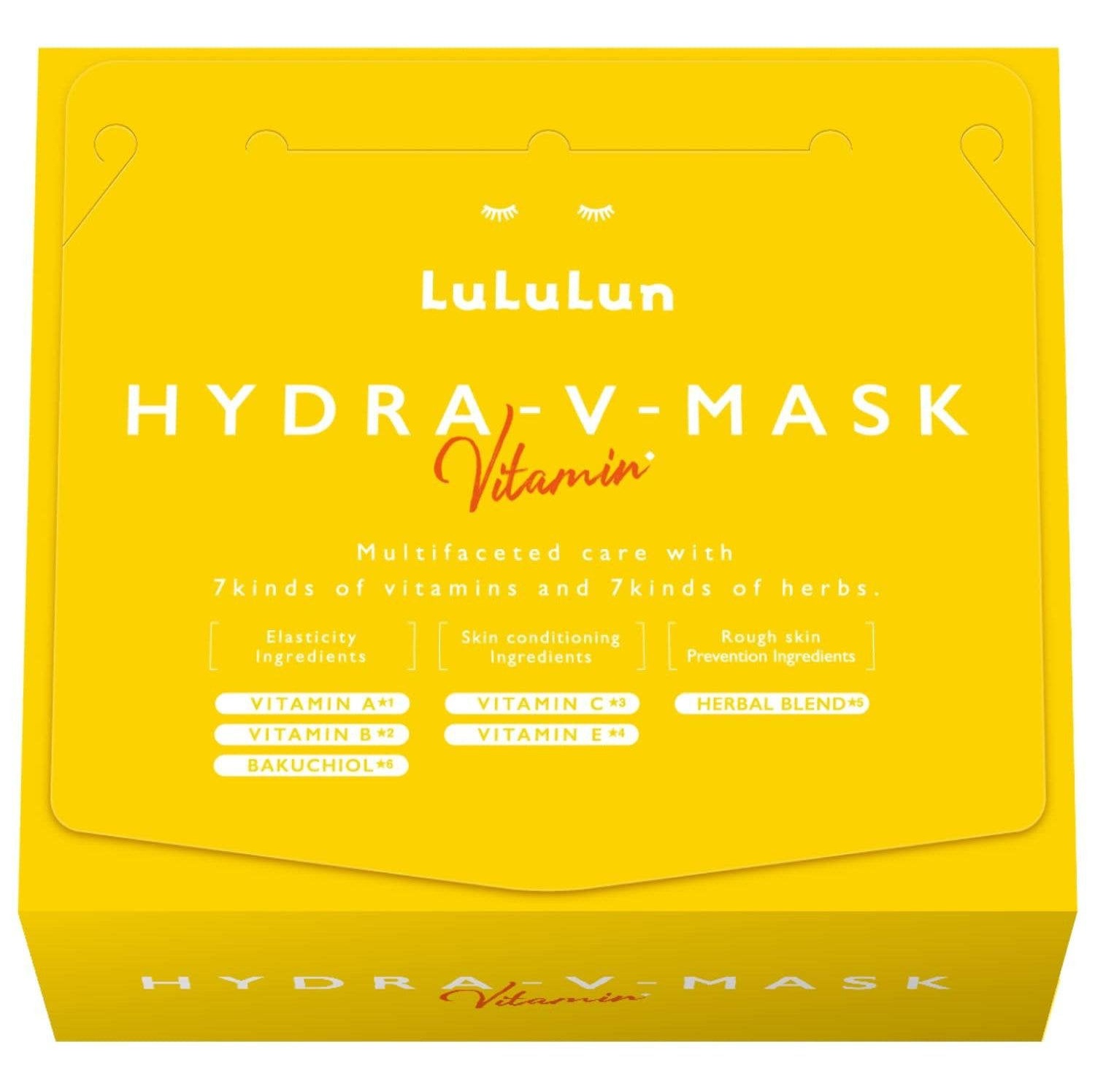
Hydra V Vitamin Mask
Ingredients overview
 INCI photo pending approval
Highlights
Key Ingredients
Other Ingredients
Skim through
Lululun Hydra V Vitamin MaskIngredients explained
Good old water, aka H2O. The most common skincare ingredient of all. You can usually find it right in the very first spot of the ingredient list, meaning it’s the biggest thing out of all the stuff that makes up the product.
It’s mainly a solvent for ingredients that do not like to dissolve in oils but rather in water.
Once inside the skin, it hydrates, but not from the outside - putting pure water on the skin (hello long baths!) is drying.
One more thing: the water used in cosmetics is purified and deionized (it means that almost all of the mineral ions inside it is removed). Like this, the products can stay more stable over time.
- A natural moisturizer that’s also in our skin
- A super common, safe, effective and cheap molecule used for more than 50 years
- Not only a simple moisturizer but knows much more: keeps the skin lipids between our skin cells in a healthy (liquid crystal) state, protects against irritation, helps to restore barrier
- Effective from as low as 3% with even more benefits for dry skin at higher concentrations up to 20-40%
- High-glycerin moisturizers are awesome for treating severely dry skin
Butylene glycol, or let’s just call it BG, is a multi-tasking colorless, syrupy liquid. It’s a great pick for creating a nice feeling product.
BG’s main job is usually to be a solvent for the other ingredients. Other tasks include helping the product to absorb faster and deeper into the skin (penetration enhancer), making the product spread nicely over the skin (slip agent), and attracting water (humectant) into the skin.
It’s an ingredient whose safety hasn’t been questioned so far by anyone (at least not that we know about). BG is approved by Ecocert and is also used enthusiastically in natural products. BTW, it’s also a food additive.
A form of skincare superstar, vitamin C. If you do not know why vitamin C is such a big deal in skincare, we have a really detailed, geeky description that's good to read. :)
So now you know that because pure vitamin C is such a diva (very unstable and hard to formulate) the cosmetic industry is trying to come up with some derivatives that have the badass anti-aging properties of vitamin C (antioxidant protection + collagen boosting + fading hyperpigmentation) but without the disadvantages. This is a hard task, and there is not yet a derivative that is really proven to be better in every aspect, but Ascorbyl Glucoside is one of the best options when it comes to vitamin C derivatives. Let's see why:
First, it's really stable and easy to formulate, so the problems that come with pure vitamin C are solved here.
Second, in vitro (meaning made in the lab, not on real humans) studies show that ascorbyl glucoside can penetrate the skin. This is kind of important for an anti-aging ingredient to do the job, so this is good news, though in-vivo (made on real humans) studies are still needed.
Third, in-vitro studies show that after ascorbyl glucoside is absorbed into the skin it is converted to pure vitamin C (though the rate of conversion is still a question mark). It also shows all the three anti-aging benefits (antioxidant protection + collagen boosting + fading hyperpigmentation) that pure vitamin C does.
Bottom line: ascorbyl glucoside is one of the best and most promising vitamin C derivatives that shows similar benefits to that of pure vitamin C, but it's less proven (in vivo vs. in vitro studies) and the extent of the benefits are also not the same.
 We don't have description for this ingredient yet.
We don't have description for this ingredient yet.
At first glance, you could think that Bakuchiol is your average plant extract. It is derived from the seeds of Psoralea Corylifolia, aka Babchi, a plant important in Indian and Chinese medicine. The molecule was first isolated in 1973 and several anti-something properties are known about it: it has anti-inflammatory, antioxidant, anti-tumor, anti-bacterial and hepatoprotective magical abilities like plenty of other Ayurvedic plant extracts.
What makes Bakuchiol a special snowflake is the recent discovery that it behaves on the skin in a way very similar to well-known skincare superstar, retinol. While chemically, it has nothing to do with the vitamin-A family, aka retinoids, comparative gene expression profiling (a fancy way of saying that they compared how retinol and bakuchiol modify the way skin cells behave and produce important skin proteins such as collagen) shows that retinol and bakuchiol regulate skin cell behavior in a similar way.
To be more specific, both Bakuchiol and retinol upregulate collagen I, III and IV production and downregulate MMP, the evil collagen attacking enzyme in our skin. This means more collagen stays in our skin and we all know that more collagen equals firmer, more wrinkle-free skin. A 12-week clinical study using a 0.5% Bakuchiol formula with 17 people using it twice a day confirmed a significant improvement in lines and wrinkles, elasticity, firmness and an overall reduction in photo-damage. Also, the test formula was very well tolerated, without any retinol-like side effects.
What's more, a 2018 double-blind study with 44 people compared 0.5% Bakuchiol with 0.5% retinol cream and found that "bakuchiol is comparable to retinol in its ability to improve photoaging and is better tolerated than retinol". A super promising result after 12 weeks.
If you are not a daredevil-type who doesn't want to stop using a super well-proven retinol for a newbie like Bakuchiol, we have good news. The two also work very nicely together and Bakuchiol can actually help to stabilize the otherwise unstable and hard to formulate retinol.
And we are still not done, as Bakuchiol shows not only anti-aging properties but also nice anti-acne effects. 1% Bakuchiol seems to be very effective in itself (57% reduction in acne after 6 weeks treatment) and even better when combined with 2% salicylic acid (67% reduction in acne after 6 weeks). We like that Bakuchiol is such a good team player! The molecule works against acne in multiple ways: It downregulates 5α-reductase (a sebum-controlling enzyme), it is antibacterial (including P. acnes), anti-inflammatory and it inhibits lipid-peroxidation, an evil oxidative process that is recently thought to be a very early trigger in the acne process.
We feel that this description is becoming very long so we will just mention that Bakuchiol also seems to positively regulate hydration-related genes such as Aquaporin 3 and also shows some melanin-inhibiting properties.
Overall, we think Bakuchiol is an awesome molecule with lots of promise both for anti-aging and anti-acne. But the proof compared to the well-established superstars is far from solid, so in a skincare routine, we would rather add Bakuchiol next to retinol than straight up replace it. Unless you are a gimme-the-newest-shiny-thing-under-the-sun-type.
- A multi-functional skincare superstar with several proven benefits for the skin
- Great anti-aging, wrinkle smoothing ingredient used at 4-5% concentration
- Fades brown spots alone or in combination with amino sugar, acetyl glucosamine
- Increases ceramide synthesis that results in a stronger, healthier skin barrier and better skin hydration
- Can help to improve several skin conditions including acne, rosacea, and atopic dermatitis
An easy-to-formulate, commonly used, nice to have ingredient that’s also called pro-vitamin B5. As you might guess from the “pro” part, it’s a precursor to vitamin B5 (whose fancy name is pantothenic acid).
Its main job in skincare products is to moisturise the skin. It’s a humectant meaning that it can help the skin to attract water and then hold onto it. There is also research showing that panthenol can help our skin to produce more lovely lipids that are important for a strong and healthy skin barrier.
Another great thing about panthenol is that it has anti-inflammatory and skin protecting abilities. A study shows that it can reduce the irritation caused by less-nice other ingredients (e.g. fragrance, preservatives or chemical sunscreens) in the product.
Research also shows that it might be useful for wound healing as it promotes fibroblast (nice type of cells in our skin that produce skin-firming collagen) proliferation.
If that wasn’t enough panthenol is also useful in nail and hair care products. A study shows that a nail treatment liquide with 2% panthenol could effectively get into the nail and significantly increase the hydration of it.
As for the hair the hydration effect is also true there. Panthenol might make your hair softer, more elastic and helps to comb your hair more easily.
Centella Asiatica - or sometimes also called Gotu Kola or Cica - has been used in folk medicine for hundreds of years. It’s traditionally used to improve small wounds, burns and scratches and it’s also a well known anti-inflammatory agent for eczema.
Recently science has taken an interest in Gotu Kola as well and it turns out it really has many active compounds with several benefits. Just for hard-core geeks, the main biologically active compounds are pentacyclic triterpenoid saponins called asiaticoside, madecassoside, asiatic and madecassic acid (also called centellosides).
One of the biological activities of the centellosides is to be able to stimulate GAGs (glycosaminoglycans - polysaccharides that are part of the liquidy stuff between our skin cells), and especially hyaluronic acid synthesis in our skin. This is probably one of the reasons why Centella Asiatica Extract has nice skin moisturizing properties that was confirmed by a 25 people, four weeks study along with Centella's anti-inflammatory effects.
Madecassoside can also help in burn wound healing through increasing antioxidant activity and enhancing collagen synthesis. Asiaticoside was shown to increase antioxidant levels on rats skin when applied at 0.2%.
Centella Asiatica also often shows up in products that try to treat cellulite or striae. Of course, it cannot make a miracle but it might have some effect via regulating microcirculation and normalizing the metabolism in the cells of connective tissues.
Bottom line: Gotu Kola is a great plant ingredient with proven wound healing, anti-inflammatory, and antioxidant properties. Nice to spot on any ingredient list.
A traditional Chinese herbal medicine loaded with potent antioxidant and anti-inflammatory flavonoids such as baicalin, baicalein, and wogonin.
If that would not be enough, Skullcap Root is also claimed to have antimicrobial and antifungal properties (also against P.acnes and Malassezia furfur) as well as some skin-brightening activity. A multi-functional skin-goodie.
We don't have description for this ingredient yet.
You might know licorice as a sweet treat from your childhood, but it's actually a legume that grows around the Mediterranean Sea, the Middle East, central and southern Russia. It's sweet and yellow and not only used for licorice all sorts but it's also a skincare superstar thanks to two magic properties:
Nr. 1 magic property is that it has skin-lightening or to say it another way depigmenting properties. The most active part is called glabridin. The topical application (meaning when you put it on your face) of 0.5% glabridin was shown to inhibit UVB caused pigmentation of guinea pigs. Another study even suggested that licorice is more effective than the gold standard skin-lightening agent hydroquinone. All in all, licorice is considered to be one of the safest skin lightening agents with the fewest side effects.
There is just one catch regarding glabridin and licorice: the amount of glabridin in commercial licorice extracts can vary a lot. We have seen extracts with only 4% glabridin as well as 40% glabridin. The latter one is a very-very expensive ingredient, so if you are after the depigmenting properties try to choose a product that boasts its high-quality licorice extract.
Nr. 2 magic property is that licorice is a potent anti-inflammatory. Glabridin has also some soothing properties but the main active anti-inflammatory component is glycyrrhizin. It’s used to treat several skin diseases that are connected to inflammation including atopic dermatitis, rosacea or eczema.
Oh, and one more thing: glabridin seems to be also an antioxidant, which is just one more reason to be happy about licorice root extract on an ingredient list.
Bottom line: Licorice is a great skincare ingredient with significant depigmenting, anti-inflammatory and even some antioxidant properties. Be happy if it's on the ingredient list. :)
- Green tea is one of the most researched natural ingredients
- The active parts are called polyphenols, or more precisely catechins (EGCG being the most abundant and most active catechin)
- There can be huge quality differences between green tea extracts. The good ones contain 50-90% catechins (and often make the product brown and give it a distinctive smell)
- Green tea is proven to be a great antioxidant, UV protectant, anti-inflammatory, anticarcinogenic and antimicrobial
- Because of these awesome properties green tea is a great choice for anti-aging and also for skin diseases including rosacea, acne and atopic dermatitis
The extract coming from the lovely herb, rosemary. It contains lots of chemicals, including flavonoids, phenolic acids, and diterpenes. Its main active is rosmarinic acid, a potent antioxidant, and anti-inflammatory. It has also anti-bacterial, astringent and toning properties.
The leaves contain a small amount of essential oil (1-2%) with fragrant components, so if you are allergic to fragrance, it might be better to avoid it.
Chamomile probably needs no introduction as it's one of the most widely used medicinal herbs. You probably drink it regularly as a nice, calming cup of tea and it's also a regular on skincare ingredient lists.
Cosmetic companies use it mainly for its anti-inflammatory properties. It contains the terpenoids chamazulene and bisabolol both of which show great anti-inflammatory action in animal studies. On top of that chamomile also has some antioxidant activity (thanks to some other active ingredients called matricine, apigenin and luteolin).
Though chamomile is usually a goodie for the skin, it's also not uncommon to have an allergic reaction to it.
A biocompatible copolymer (a big molecule that consists of more than one type of building blocks) that has the same structure as important cell membrane ingredient, phospholipid. Polyquaternium-51 is a good skin moisturizer, leaves a silky, smooth feel on the skin and can help to reduce irritation caused by some not-so-nice ingredients (like surfactants).
We don't have description for this ingredient yet.
We don't have description for this ingredient yet.
We don't have description for this ingredient yet.
It's an ester form of vitamin A (retinol + palmitic acid) that belongs to the "retinoid family". The retinoid family is pretty much the royal family of skincare, with the king being the FDA-approved anti-aging ingredient tretinoin. Retinol is also a very famous member of the family, but it's like Prince George, two steps away from the throne. Retinyl palmitate will be then Prince Charlotte (George's little sister), quite far (3 steps) away from the throne.
By steps, we mean metabolic steps. Tretinoin, aka retinoic acid, is the active ingredient our skin cells can understand and retinyl palmitate (RP) has to be converted by our metabolic machinery to actually do something. The conversion is a 3 step one and looks like this:
retinyl palmitate --> retinol -- > retinaldehyde --> all-trans-retinoic acid
As we wrote in our lengthy retinol description the problem is that the conversion is not terribly effective. The evidence that RP is still an effective anti-aging ingredient is not very strong, in fact, it's weak. Dr. Leslie Baumann in her fantastic Cosmetic Dermatology book writes that RP is topically ineffective.
What's more, the anti-aging effectiveness is not the only questionable thing about RP. It also exibits questionable behaviour in the presence of UV light and was the center of a debate between the non-profit group, EWG (whose intentions are no doubt good, but its credibility is often questioned by scientists) and a group of scientists and dermatologists lead by Steven Q. Wang, MD, director of dermatologic surgery at Memorial-Sloan Kettering Cancer Centre.
Dr. Leslie Baumann wrote a great review of the debate and summarized the research available about retinyl palmitate here. It seems that there is a study showing RP being photo protective against UVB rays but there is also a study showing RP causing DNA damage and cytotoxicity in association with UVA.
We think that the truth lies somewhere in the middle, and we agree with Dr. Baumann's conclusion: "sufficient evidence to establish a causal link between RP and skin cancer has not been produced. Nor, I’m afraid, are there any good reasons to recommend the use of RP". We would add especially during the day!
Bottom line: If you wanna get serious about retinoids, RP is not your ingredient (retinol or tretinoin is!). However, if you use a product that you like and it also contains RP, there is no reason to throw it away. If possible use it at night, just to be on the safe side.
It’s the most commonly used version of pure vitamin E in cosmetics. You can read all about the pure form here. This one is the so-called esterified version.
According to famous dermatologist, Leslie Baumann while tocopheryl acetate is more stable and has a longer shelf life, it’s also more poorly absorbed by the skin and may not have the same awesome photoprotective effects as pure Vit E.
We don't have description for this ingredient yet.
It's the chemically chopped up version of normal lecithin. Most often it's used to create liposomes and to coat and stabilize other ingredients.
A castor oil derived, white, lard-like helper ingredient that is used as a solubilizer to put fragrances (those are oil loving things) into water-based products such as toners.
A mildly viscous, amber-colored liquid with fatty odor, made from Castor Oil and polyethylene glycol (PEG).
If it were a person, we’d say, it’s agile, diligent & multifunctional. It’s mostly used as an emulsifier and surfactant but most often it is used to solubilize fragrances into water-based formulas.
It's one of the most commonly used thickeners and emulsion stabilizers. If the product is too runny, a little xanthan gum will make it more gel-like. Used alone, it can make the formula sticky and it is a good team player so it is usually combined with other thickeners and so-called rheology modifiers (helper ingredients that adjust the flow and thus the feel of the formula). The typical use level of Xantha Gum is below 1%, it is usually in the 0.1-0.5% range.
Btw, Xanthan gum is all natural, a chain of sugar molecules (polysaccharide) produced from individual sugar molecules (glucose and sucrose) via fermentation. It’s approved by Ecocert and also used in the food industry (E415).
Super common little helper ingredient that helps products to remain nice and stable for a longer time. It does so by neutralizing the metal ions in the formula (that usually get into there from water) that would otherwise cause some not so nice changes.
It is typically used in tiny amounts, around 0.1% or less.
Citric acid comes from citrus fruits and is an AHA. If these magic three letters don’t tell you anything, click here and read our detailed description on glycolic acid, the most famous AHA.
So citric acid is an exfoliant, that can - just like other AHAs - gently lift off the dead skin cells of your skin and make it more smooth and fresh.
There is also some research showing that citric acid with regular use (think three months and 20% concentration) can help sun-damaged skin, increase skin thickness and some nice hydrating things called glycosaminoglycans in the skin.
But according to a comparative study done in 1995, citric acid has less skin improving magic properties than glycolic or lactic acid. Probably that’s why citric acid is usually not used as an exfoliant but more as a helper ingredient in small amounts to adjust the pH of a formulation.
A little helper ingredient that is used to adjust the pH of the product. It also helps to keep products stay nice longer by neutralizing the metal ions in the formula (they usually come from water).
It’s pretty much the current IT-preservative. It’s safe and gentle, but even more importantly, it’s not a feared-by-everyone-mostly-without-scientific-reason paraben.
It’s not something new: it was introduced around 1950 and today it can be used up to 1% worldwide. It can be found in nature - in green tea - but the version used in cosmetics is synthetic.
Other than having a good safety profile and being quite gentle to the skin it has some other advantages too. It can be used in many types of formulations as it has great thermal stability (can be heated up to 85°C) and works on a wide range of pH levels (ph 3-10).
It’s often used together with ethylhexylglycerin as it nicely improves the preservative activity of phenoxyethanol.
The most common type of feared-by-everyone-mostly-without-scientific-reason parabens. It's a cheap, effective and well-tolerated ingredient to make sure the cosmetic formula does not go wrong too soon.
Apart from the general controversy around parabens (we wrote about it more here), there is a 2006 in-vitro (made in the lab not on real people) research about methylparaben (MP) showing that when exposed to sunlight, MP treated skin cells suffered more harm than non-MP treated skin cells. The study was not done with real people on real skin but still - using a good sunscreen next to MP containing products is a good idea. (Well, in fact using a sunscreen is always a good idea. :))
You may also want to take a look at...
| what‑it‑does | solvent |
| what‑it‑does | skin-identical ingredient | moisturizer/humectant |
| irritancy, com. | 0, 0 |
| what‑it‑does | moisturizer/humectant | solvent |
| irritancy, com. | 0, 1 |
| what‑it‑does | antioxidant | skin brightening |
| what‑it‑does | cell-communicating ingredient | antioxidant | antimicrobial/antibacterial |
| what‑it‑does | cell-communicating ingredient | skin brightening | anti-acne | moisturizer/humectant |
| what‑it‑does | soothing | moisturizer/humectant |
| irritancy, com. | 0, 0 |
| what‑it‑does | soothing | antioxidant | moisturizer/humectant |
| what‑it‑does | soothing | antioxidant | antimicrobial/antibacterial | moisturizer/humectant |
| what‑it‑does | antioxidant |
| what‑it‑does | soothing | skin brightening |
| what‑it‑does | antioxidant | soothing |
| what‑it‑does | antioxidant | soothing | antimicrobial/antibacterial |
| what‑it‑does | soothing | antioxidant |
| irritancy, com. | 0, 0 |
| what‑it‑does | moisturizer/humectant |
| what‑it‑does | moisturizer/humectant |
| what‑it‑does | moisturizer/humectant |
| what‑it‑does | cell-communicating ingredient |
| irritancy, com. | 1-3, 1-3 |
| what‑it‑does | antioxidant |
| irritancy, com. | 0, 0 |
| irritancy, com. | 0, 2 |
| what‑it‑does | emollient | emulsifying |
| what‑it‑does | emulsifying | surfactant/cleansing |
| what‑it‑does | emulsifying | surfactant/cleansing |
| what‑it‑does | viscosity controlling |
| what‑it‑does | chelating |
| what‑it‑does | buffering |
| what‑it‑does | chelating | buffering |
| what‑it‑does | preservative |
| what‑it‑does | preservative |
| irritancy, com. | 0, 0 |