





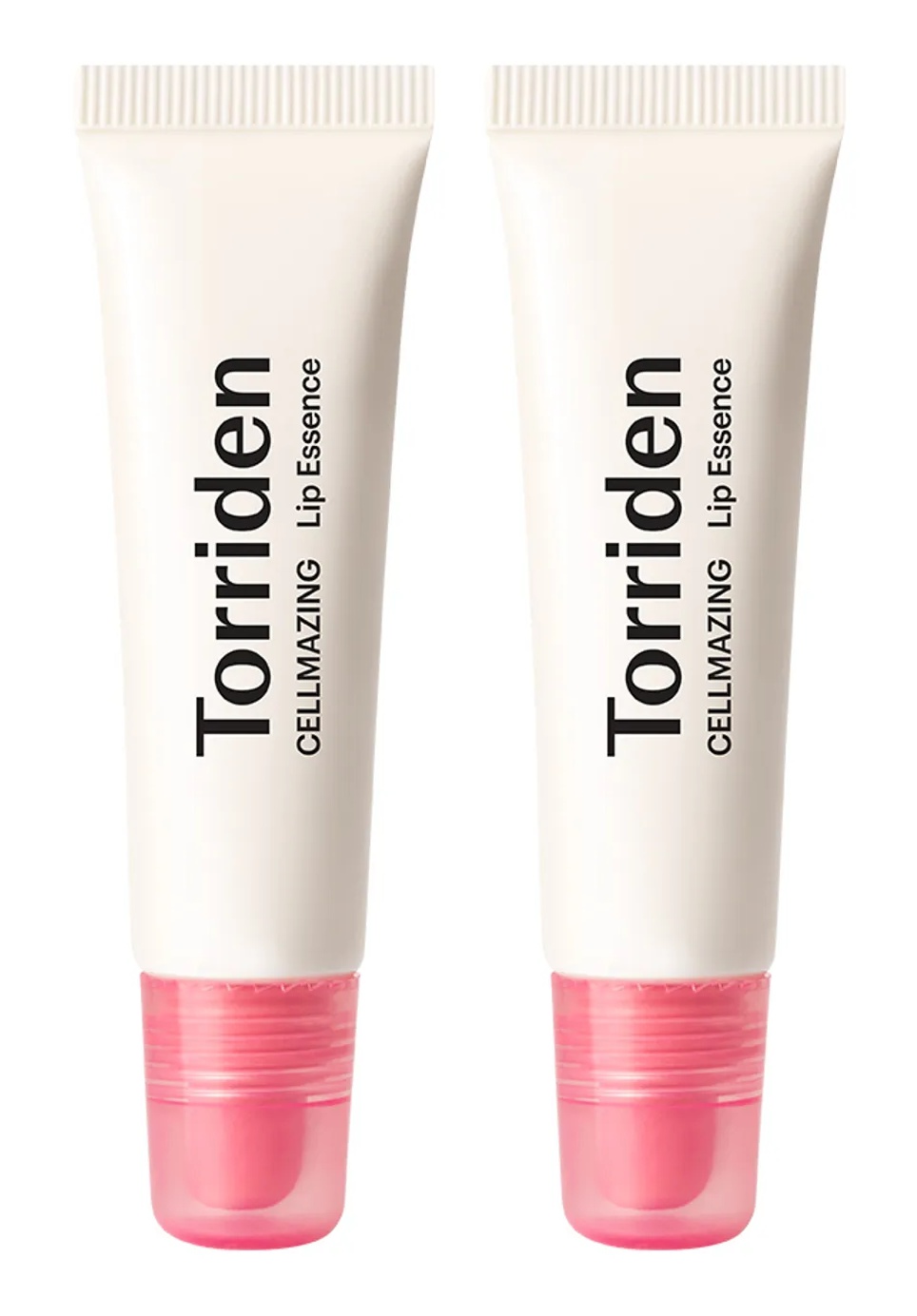
Cellmazing Low Molecular Collagen Lip Essence
Ingredients overview
Highlights
Key Ingredients
Other Ingredients
Skim through
Torriden Cellmazing Low Molecular Collagen Lip EssenceIngredients explained
A polymer (big molecule from repeated subunits) that's used as a gloss improver for lipsticks and lipglosses. Its stickiness also helps lip products to stay on longer.
Combined with polyacrylate-13 and polysorbate 20, it forms a very effective tickener-emulsifier trio.
 We don't have description for this ingredient yet.
A clear, colorless, odorless oily liquid that makes the formula easily spreadable and also makes the skin nice and smooth (emollient). It's especially helpful in sunscreens as it can help to solubilize UV filters.
Jojoba is a drought resistant evergreen shrub native to South-western North America. It's known and grown for jojoba oil, the golden yellow liquid coming from the seeds (about 50% of the weight of the seeds will be oil).
At first glance, it seems like your average emollient plant oil: it looks like an oil and it's nourishing and moisturizing to the skin but if we dig a bit deeper, it turns out that jojoba oil is really special and unique: technically - or rather chemically - it's not an oil but a wax ester (and calling it an oil is kind of sloppy).
So what the heck is a wax ester and why is that important anyway? Well, to understand what a wax ester is, you first have to know that oils are chemically triglycerides: one glycerin + three fatty acids attached to it. The fatty acids attached to the glycerin vary and thus we have many kinds of oils, but they are all triglycerides. Mother Nature created triglycerides to be easily hydrolyzed (be broken down to a glycerin + 3 fatty acid molecules) and oxidized (the fatty acid is broken down into small parts) - this happens basically when we eat fats or oils and our body generates energy from it.
Mother Nature also created wax esters but for a totally different purpose. Chemically, a wax ester is a fatty acid + a fatty alcohol, one long molecule. Wax esters are on the outer surface of several plant leaves to give them environmental protection. 25-30% of human sebum is also wax esters to give us people environmental protection.
So being a wax ester results in a couple of unique properties: First, jojoba oil is extremely stable. Like crazy stable. Even if you heat it to 370 C (698 F) for 96 hours, it does not budge. (Many plant oils tend to go off pretty quickly). If you have some pure jojoba oil at home, you should be fine using it for years.
Second, jojoba oil is the most similar to human sebum (both being wax esters), and the two are completely miscible. Acne.org has this not fully proven theory that thanks to this, jojoba might be able to "trick" the skin into thinking it has already produced enough sebum, so it might have "skin balancing" properties for oily skin.
Third, jojoba oil moisturizes the skin through a unique dual action: on the one hand, it mixes with sebum and forms a thin, non-greasy, semi-occlusive layer; on the other hand, it absorbs into the skin through pores and hair follicles then diffuses into the intercellular spaces of the outer layer of the skin to make it soft and supple.
On balance, the point is this: in contrast to real plant oils, wax esters were designed by Mother Nature to stay on the surface and form a protective, moisturizing barrier and jojoba oil being a wax ester is uniquely excellent at doing that.
You probably know olive oil from the kitchen as a great and healthy option for salad dressing but it's also a great and healthy option to moisturize and nourish the skin, especially if it's on the dry side.
Similar to other emollient plant oils, it's loaded with nourishing fatty acids: oleic is the main component (55-83%), and also contains linoleic (3.5-20%) and palmitic acids (7-20%). It also contains antioxidant polyphenols, tocopherols (types of vitamin E) and carotenoids and it's one of the best plant sources of skin-identical emollient, Squalene.
Overall, a great option for dry skin but less so for acne-prone or damaged skin.
The famous Vaseline or Petroleum Jelly. Just like mineral oil, it is also a by-product of refining crude oil, aka petroleum, and it is also a mixture of hydrocarbons but with bigger (C18-90+) carbon chain length.
The unique thing about petrolatum is that it is the most effective occlusive agent known today. While the occlusivity of mineral oil is in the same league as the occlusivity of plant oils, petrolatum is in a league of its own. It sits on top of the skin and hinders so-called transepidermal water loss (TEWL) like nothing else.
This comes in handy healing cracked lips or severely dry skin patches, though overdoing it (i.e. reducing TEWL by more than 40%) is not good as it can create a nice moist place for fungi and bacteria to grow.
As for petrolatum and safety, we can write here pretty much the exact same thing as we have written at mineral oil. There is no evidence whatsoever that cosmetic, USP grade petrolatum is carcinogenic. It also does not absorb into the skin but sits on top of it and that in itself greatly minimises health risks. It also has a long history of safe use, as it was first used as a skincare product more than 100 years ago, in 1872 to be precise.
It is also non-comedogenic, though its pure form is very heavy and greasy so combination and oily skin types might want to avoid it anyway.
Overall, it is the gold-standard occlusive agent known today and a tub of Vaseline comes in handy in any household to heal cracked lips or other severely dry skin patches.
A clear, colorless liquid that works as a solvent and viscosity decreasing ingredient. It also has great skin-moisturizing abilities.
We don't have description for this ingredient yet.
Unless you live under a rock you must have heard about shea butter. It's probably the most hyped up natural butter in skincare today. It comes from the seeds of African Shea or Karite Trees and used as a magic moisturizer and emollient.
But it's not only a simple emollient, it regenerates and soothes the skin, protects it from external factors (such as UV rays or wind) and is also rich in antioxidants (among others vitamin A, E, F, quercetin and epigallocatechin gallate). If you are looking for rich emollient benefits + more, shea is hard to beat.
The golden yellow oil coming from the Macadamia nut, a native Australian nut. Similar to other plant oils, it's loaded with emollient and nourishing fatty acids. It's a high oleic acid oil (50-67% oleic acid and only 0-5% linoleic acid) that makes it very emollient and ideal for dry skin types (and less ideal for acne-prone skin).
Its unique property is that it contains high amounts of a rare fatty acid called palmitoleic acid (12-25%) that give Macadamia oil a "cushiony" feel. It's also easily absorbed and makes the skin soft and supple.
We don't have description for this ingredient yet.
Adenosine is an important little compound in our body that has a vital cell-signalling role. Research on smearing it on our face is also promising and shows so far a couple of things:
- It can help with wound healing
- It’s a good anti-inflammatory agent
- It might even help with skin’s own collagen production and improve skin firmness and elasticity
- It helps with barrier repair and protection
- It might be even useful for the hair helping with hair thickness and hair growth
- A natural moisturizer that’s also in our skin
- A super common, safe, effective and cheap molecule used for more than 50 years
- Not only a simple moisturizer but knows much more: keeps the skin lipids between our skin cells in a healthy (liquid crystal) state, protects against irritation, helps to restore barrier
- Effective from as low as 3% with even more benefits for dry skin at higher concentrations up to 20-40%
- High-glycerin moisturizers are awesome for treating severely dry skin
A mainly oil loving molecule that helps water and oil to mix nicely, aka emulsifier. In itself, it can create water-in-oil emulsions (when water droplets are dispersed in oil), but it is used mostly next to water-loving emulsifiers to create nice and smooth oil-in-water creams. It can also function as a wetting and dispersing agent helping insoluble particles such as color pigments or inorganic sunscreens (zinc/titanium dioxide) to disperse nice and even in liquids.
Chemically speaking, this molecule is "halfway" between Sorbitan Oleate and Sorbitan Trioleate, meaning that it is also an attachment of sorbitan (a dehydrated sorbitol (sugar) molecule) with the unsaturated fatty acid Oleic Acid, but in a ratio of 2:3 hence the "Sesqui" part in the molecule's name.
A multi-functional, silky feeling helper ingredient that can do quite many things. It's used as an emulsion stabilizer, solvent and a broad spectrum antimicrobial. According to manufacturer info, it's also a moisturizer and helps to make the product feel great on the skin. It works synergistically with preservatives and helps to improve water-resistance of sunscreens.
It’s the most commonly used version of pure vitamin E in cosmetics. You can read all about the pure form here. This one is the so-called esterified version.
According to famous dermatologist, Leslie Baumann while tocopheryl acetate is more stable and has a longer shelf life, it’s also more poorly absorbed by the skin and may not have the same awesome photoprotective effects as pure Vit E.
The big and important protein molecule that usually comes from animal skin such as fish or bovine. The gist of the "collagen in topical skincare" subject is to know that collagen in a jar has nothing to do with wrinkles but everything to do with skin hydration. We have a shiny explanation about this at soluble collagen, so click here to read more >>
Amino acids are important natural moisturizing factors (NMFs), that can be found naturally in the skin where they help the epidermis (upper layer of the skin) to stay nice and hydrated.
Amino acids are also the building blocks of proteins, such as collagen, so when you thoroughly chop up a big collagen molecule, you end up with an amino acid mixture, like this guy we are writing about. Btw, if you chop it up less thoroughly, you get hydrolyzed collagen, a kind of peptide mixture with smallish chains of amino acids.
Amino acids have low molecular weight (about 150 Da), so they can penetrate the upper layer of the skin where they help moisture retention and enhance the skin's suppleness and flexibility. In hair care, Collagen Amino Acids are able to improve shine, texture, and manageability of the hair.
We don't have description for this ingredient yet.
Soluble Collagen refers to the big, natural collagen molecules mostly extracted from fish or bovine skin. Spotting collagen on the ingredient list, you might think that, aha, this must be there to supplement the collagen content of our own skin, but you have to know that collagen is a huge-huge molecule that cannot absorb to the middle layer of the skin where collagen is and even if it could, it cannot just magically go the right places to become part of the skin's own collagen network. Putting collagen on your skin for anti-aging purposes is like throwing tent poles onto a ramshackle tent and expecting the tent to magically become nice and firm again.
The strong point of collagen is being a large molecule with tremendous water binding capacity, i.e. an amazing humectant and moisturizer. It produces a water-rich film on the skin giving the stratum corneum (the uppermost layer of the skin) great hydration, making it nice and smooth and reducing trans-epidermal-water loss (the process of water evaporating out of your skin).
It is also so gentle and non-irritant that it can actually be used in cleansers to reduce the irritating potential of harsh surfactants, aka cleansing agents.
If you are fine with animal-derived ingredients and know that collagen in a jar has nothing to do with wrinkles but everything to do with skin hydration, Soluble Collagen is a nice ingredient.
The chemically chopped up version of the big protein molecule, collagen. It is often derived from fish or bovine sources and works as a nice moisturizer and humectant that helps the skin to hold onto water.
To understand a bit more what Hydrolyzed Collagen is, you have to know that proteins are large chains of amino acids connected with so-called peptide bonds. These bonds can be broken up when a water molecule is added and the resulting thing is a mix of shorter length amino acids, also called peptides. So Hydrolyzed Collagen is not really collagen, it is rather an undefined and varying mix of largish peptides. Based on a manufacturer's data, the whole, soluble collagen has an average molecular weight of 300 000 Da, while this chopped up mixture has an average MW of 12 000 Da (still pretty big).
The main thing of these largish peptides is to act as water-binding agents, and to make the skin nice and smooth (aka emollient). Hydrolyzed Collagen is also often used in cleansers as it can make harsh surfactants milder and in hair conditioners as it improves the flexibility and manageability of hair.
If you wanna know more about collagen in cosmetics, we have a shiny explanation about soluble collagen here >>
If you see a cosmetic product that claims that it has "Botox-like effect" then two things are almost certain: one, the product overpromises and two, it contains Argireline.
So this one is the famous peptide that's marketed by its manufacturer as the "Botox in a jar". The basis for this claim is that it targets the same wrinkle forming mechanism (wrinkles caused by facial muscle movement) as Botox, but the way it works is very different. In addition, the extent to which it can prevent muscles from contracting (and to smooth wrinkles) is very different (otherwise why would anyone use still Botox?).
The manufacturer did several studies to prove that Argireline really works and it does (just not as well as Botox). In-vivo (made on real people) tests showed that using 10% Argireline solution around the eyes for 15 days decreased wrinkles depth by 17%, while a 5% Argireline formula applied for 28 days did almost the same with a decrease in wrinkle depth by 16.26%. A Spanish University also did some research and found that Argireline increased the level of skin moisturization and decreased both the depth and width of wrinkles "significantly".
This means, Acetyl Hexapeptide-8 does have some ability to smooth wrinkles (but not as well as Botox - sorry, if we sound like a broken record). Also, we have to agree with TruthInAging, that it's not a collagen builder and not a preventer of structural aging (think vitamin C, AHAs or retinol); it's just a quick fix. If you are looking for one, this could be your thing. If you are more of a "let's treat this aging thing properly" type, then it's probably not your thing.
We don't have description for this ingredient yet.
We don't have description for this ingredient yet.
- A multi-functional skincare superstar with several proven benefits for the skin
- Great anti-aging, wrinkle smoothing ingredient used at 4-5% concentration
- Fades brown spots alone or in combination with amino sugar, acetyl glucosamine
- Increases ceramide synthesis that results in a stronger, healthier skin barrier and better skin hydration
- Can help to improve several skin conditions including acne, rosacea, and atopic dermatitis
We don't have description for this ingredient yet.
Butylene glycol, or let’s just call it BG, is a multi-tasking colorless, syrupy liquid. It’s a great pick for creating a nice feeling product.
BG’s main job is usually to be a solvent for the other ingredients. Other tasks include helping the product to absorb faster and deeper into the skin (penetration enhancer), making the product spread nicely over the skin (slip agent), and attracting water (humectant) into the skin.
It’s an ingredient whose safety hasn’t been questioned so far by anyone (at least not that we know about). BG is approved by Ecocert and is also used enthusiastically in natural products. BTW, it’s also a food additive.
It’s a handy multi-tasking ingredient that gives the skin a nice, soft feel. At the same time, it also boosts the effectiveness of other preservatives, such as the nowadays super commonly used phenoxyethanol.
The blend of these two (caprylyl glycol + phenoxyethanol) is called Optiphen, which not only helps to keep your cosmetics free from nasty things for a long time but also gives a good feel to the finished product. It's a popular duo.
Good old water, aka H2O. The most common skincare ingredient of all. You can usually find it right in the very first spot of the ingredient list, meaning it’s the biggest thing out of all the stuff that makes up the product.
It’s mainly a solvent for ingredients that do not like to dissolve in oils but rather in water.
Once inside the skin, it hydrates, but not from the outside - putting pure water on the skin (hello long baths!) is drying.
One more thing: the water used in cosmetics is purified and deionized (it means that almost all of the mineral ions inside it is removed). Like this, the products can stay more stable over time.
Also called vitamin H, biotin is the main component of many enzymes in our body. A nice ingredient to take as a supplement for stronger nails and hair. When you do not take it as a supplement its effects are a bit more questionable but according to manufacturer info it can smooth the skin and strengthen the hair.
A really multi-functional helper ingredient that can do several things in a skincare product: it can bring a soft and pleasant feel to the formula, it can act as a humectant and emollient, it can be a solvent for some other ingredients (for example it can help to stabilize perfumes in watery products) and it can also help to disperse pigments more evenly in makeup products. And that is still not all: it can also boost the antimicrobial activity of preservatives.
You may also want to take a look at...
| what‑it‑does | viscosity controlling |
| what‑it‑does | emollient | surfactant/cleansing |
| what‑it‑does | emollient | solvent |
| what‑it‑does | emollient |
| irritancy, com. | 0, 0-2 |
| what‑it‑does | antioxidant | emollient |
| irritancy, com. | 0, 0-2 |
| what‑it‑does | emollient |
| what‑it‑does | solvent |
| what‑it‑does | viscosity controlling |
| what‑it‑does | emollient |
| what‑it‑does | emollient |
| what‑it‑does | perfuming | viscosity controlling |
| what‑it‑does | cell-communicating ingredient |
| what‑it‑does | skin-identical ingredient | moisturizer/humectant |
| irritancy, com. | 0, 0 |
| what‑it‑does | emulsifying |
| irritancy, com. | 0, 0-1 |
| what‑it‑does | solvent | moisturizer/humectant |
| what‑it‑does | antioxidant |
| irritancy, com. | 0, 0 |
| what‑it‑does | moisturizer/humectant |
| what‑it‑does | skin-identical ingredient | moisturizer/humectant |
| what‑it‑does | moisturizer/humectant |
| what‑it‑does | emollient | moisturizer/humectant |
| what‑it‑does | skin brightening |
| what‑it‑does | cell-communicating ingredient | moisturizer/humectant |
| what‑it‑does | cell-communicating ingredient | skin brightening | anti-acne | moisturizer/humectant |
| what‑it‑does | moisturizer/humectant | solvent |
| irritancy, com. | 0, 1 |
| what‑it‑does | moisturizer/humectant | emollient |
| what‑it‑does | solvent |
| what‑it‑does | solvent |