





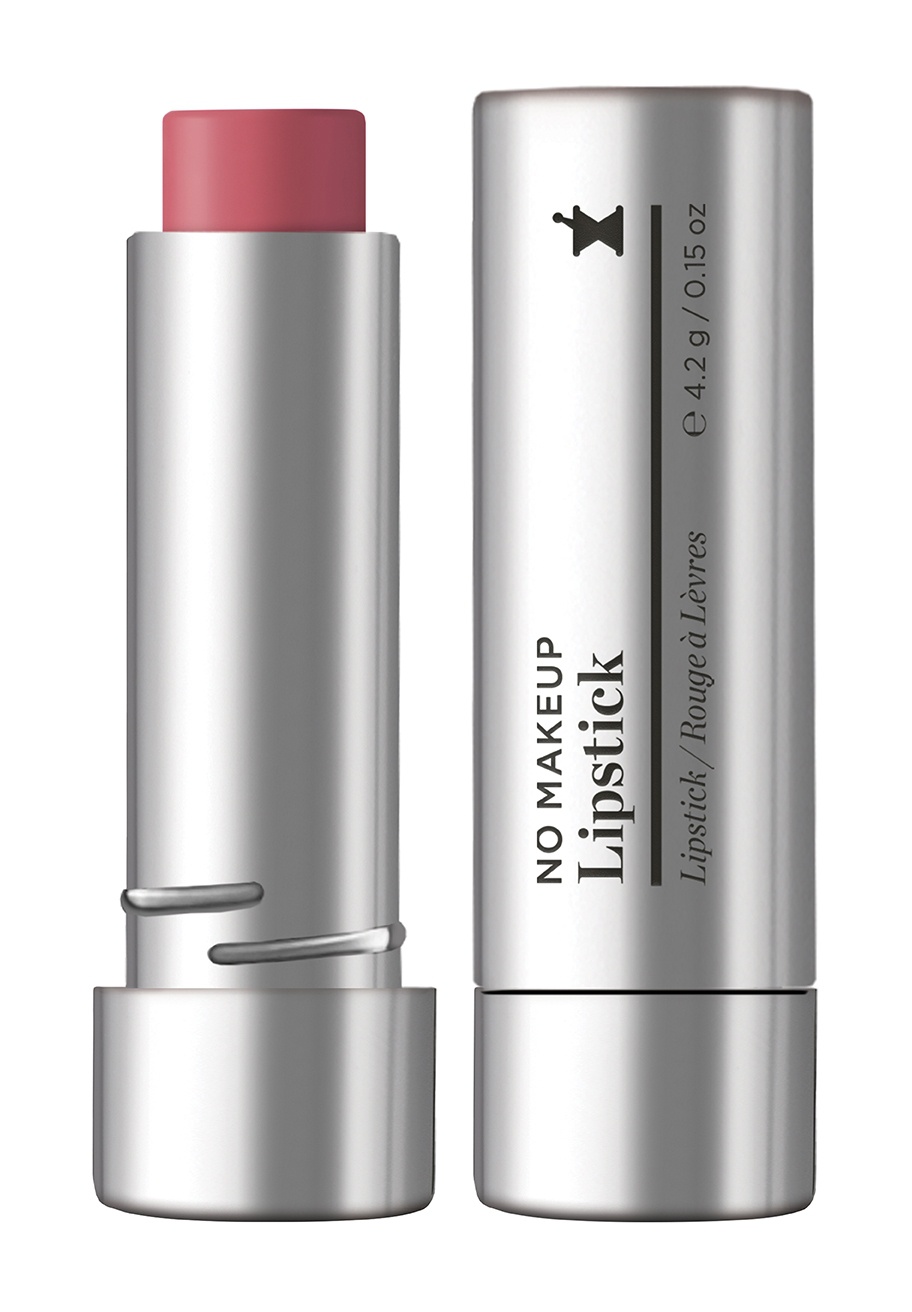
No Makeup Lipstick - Cognac
Ingredients overview
Highlights
Key Ingredients
Other Ingredients
Skim through
Perricone MD No Makeup Lipstick - CognacIngredients explained
When it comes to sunscreen agents, Zinc Oxide is pretty much in a league of its own. It's a physical (or inorganic) sunscreen that has a lot in common with fellow inorganic sunscreen Titanium Dioxide (TiO2) but a couple of things make it superior even to TiO2.
If physical sunscreens don't tell you anything, go ahead and read about the basics here. Most of what we wrote about Titanium Dioxide is also true for Zinc Oxide so we will focus here on the differences.
The first main difference is that while TiO2 gives a nice broad spectrum protection, Zinc Oxide has an even nicer and even broader spectrum protection. It protects against UVB, UVA II, and UVA I almost uniformly, and is considered to be the broadest range sunscreen available today.
It's also highly stable and non-irritating. So much so that Zinc Oxide also counts as a skin protectant and anti-irritant. It's also often used to treat skin irritations such as diaper rash.
As for the disadvantages, Zinc Oxide is also not cosmetically elegant. It leaves a disturbing whitish tint on the skin, although, according to a 2000 research paper by Dr. Pinnell, it's slightly less white than TiO2. Still, it's white and disturbing enough to use Zinc Oxide nanoparticles more and more often.
We wrote more about nanoparticles and the concerns around them here, but the gist is that if nanoparticles were absorbed into the skin that would be a reason for legitimate health concerns. But luckily, so far research shows that sunscreen nanoparticles are not absorbed but remain on the surface of the skin or in the uppermost (dead) layer of the skin. This seems to be true even if the skin is damaged, for example, sunburnt.
All in all, if you've found a Zinc Oxide sunscreen that you are happy to use every single day, that's fantastic and we suggest you stick with it. It's definitely one of the best, or probably even the best option out there for sun protection available worldwide.
 We don't have description for this ingredient yet.
Polyethylene is the most common plastic in the world. It is a super versatile polymer (molecule from repeated subunits) and when it comes to cosmetics, it is often referred to as microbeads. Well, it used to be referred to as microbeads, as it was banned in 2015 in the " Microbead-Free Waters Act" due to the small plastic spheres accumulating in the waters and looking like food to fish. Well done by Obama.
But being versatile means that polyethylene does not only come as scrub particles but also as a white wax. In its wax-form, it is still well, alive and pretty popular. It thickens up water-free formulas, increases hardness and raises the melting point of emulsions and water-less balms. It is particularly common in cleansing balms and stick-type makeup products due to its ability to add body, hardness and slip to these formulas.
Jojoba is a drought resistant evergreen shrub native to South-western North America. It's known and grown for jojoba oil, the golden yellow liquid coming from the seeds (about 50% of the weight of the seeds will be oil).
At first glance, it seems like your average emollient plant oil: it looks like an oil and it's nourishing and moisturizing to the skin but if we dig a bit deeper, it turns out that jojoba oil is really special and unique: technically - or rather chemically - it's not an oil but a wax ester (and calling it an oil is kind of sloppy).
So what the heck is a wax ester and why is that important anyway? Well, to understand what a wax ester is, you first have to know that oils are chemically triglycerides: one glycerin + three fatty acids attached to it. The fatty acids attached to the glycerin vary and thus we have many kinds of oils, but they are all triglycerides. Mother Nature created triglycerides to be easily hydrolyzed (be broken down to a glycerin + 3 fatty acid molecules) and oxidized (the fatty acid is broken down into small parts) - this happens basically when we eat fats or oils and our body generates energy from it.
Mother Nature also created wax esters but for a totally different purpose. Chemically, a wax ester is a fatty acid + a fatty alcohol, one long molecule. Wax esters are on the outer surface of several plant leaves to give them environmental protection. 25-30% of human sebum is also wax esters to give us people environmental protection.
So being a wax ester results in a couple of unique properties: First, jojoba oil is extremely stable. Like crazy stable. Even if you heat it to 370 C (698 F) for 96 hours, it does not budge. (Many plant oils tend to go off pretty quickly). If you have some pure jojoba oil at home, you should be fine using it for years.
Second, jojoba oil is the most similar to human sebum (both being wax esters), and the two are completely miscible. Acne.org has this not fully proven theory that thanks to this, jojoba might be able to "trick" the skin into thinking it has already produced enough sebum, so it might have "skin balancing" properties for oily skin.
Third, jojoba oil moisturizes the skin through a unique dual action: on the one hand, it mixes with sebum and forms a thin, non-greasy, semi-occlusive layer; on the other hand, it absorbs into the skin through pores and hair follicles then diffuses into the intercellular spaces of the outer layer of the skin to make it soft and supple.
On balance, the point is this: in contrast to real plant oils, wax esters were designed by Mother Nature to stay on the surface and form a protective, moisturizing barrier and jojoba oil being a wax ester is uniquely excellent at doing that.
A viscous, thick liquid emollient that gives lubricity and cushion at low use levels. It's great for night creams, eye area products, and skin treatment products due to the substantive film forming ability.
A clear, slightly yellow, odorless oil that's a very common, medium-spreading emollient. It makes the skin feel nice and smooth and works in a wide range of formulas.
We don't have description for this ingredient yet.
We don't have description for this ingredient yet.
We don't have description for this ingredient yet.
We don't have description for this ingredient yet.
A super common, medium-spreading emollient ester that gives richness to the formula and a mild feel during rubout. It can be a replacement for mineral oil and is often combined with other emollients to achieve different sensorial properties.
A white powdery thing that's the major component of glass and sand. In cosmetics, it’s often in products that are supposed to keep your skin matte as it has great oil-absorbing abilities. It’s also used as a helper ingredient to thicken up products or suspend insoluble particles.
It's the yellow, solid stuff that you probably know from beeswax candles. It's a natural material produced by honey bees to build their honeycomb.
As for skincare, it's used as an emollient and thickening agent. It's super common in lip balms and lipsticks.
A clear, pale yellow oil-like liquid that's claimed to be similar to the lipids that are naturally in the outermost layer of the skin. It's not only similar to them but it is also biomimetic, meaning that it can mimic the functionality of our skin lipids.
The skin lipids play a super important role in maintaining a healthy skin barrier and keeping the skin nice and moisturized and not dry or cracked. So C10-30 Cholesterol/Lanosterol Esters, aka Super Sterol Liquid can do something similar: it is an extremely efficient emollient that can repair even dry hands or cracked lips and it is great at maintaining a healthy skin barrier.
A goodie for super dry skin.
A hydrocarbon wax consisting mainly of saturated straight chain hydrocarbons with C18-90+ carbon chain length. It has a high melting point (58-100 C) and it is used mainly in stick type products, such as lip balms to keep the product nice and solid.
We don't have description for this ingredient yet.
A helper ingredient that's used as a gelling agent together with a hydrocarbon and its sibling, Ethylene/Propylene/Styrene Copolymer. Read more there.
A helper ingredient that's used as an oil gelling agent together with its sibling, Butylene/Ethylene/Styrene Copolymer.
These two together can be combined with different types of hydrocarbons (e.g. mineral oil or different emollient esters) to form gels with different sensorial and physical properties. The resulted hydrocarbon gels can improve skin occlusivity (and reduce trans-epidermal water loss) and they are also excellent to form suspensions.
We don't have description for this ingredient yet.
A really famous peptide that is part of Matrixyl 3000, the most sold peptide complex in the word. Before we go and find out what the big deal with Matrixyl 3000 is, let's just focus on Palmitoyl Tripeptide-1 itself for a bit.
It's a small three amino acid (they are the building blocks of all proteins) peptide with the amino sequence of glycine-histidine-lysine, or GHK. GHK is attached to palmitic acid (a fatty acid) to increase oil solubility and skin penetration.
The GHK part is the important one as it's a type I collagen fragment. When collagen naturally breaks down in the skin, the resulting peptide fragments signal to the skin that it should get to work and create some nice, new collagen. Adding in collagen fragment peptides, like GHK, might trick the skin into thinking that collagen has broken down and it's time to create some more.
Therefore, Palmitoyl Tripeptide-1 is believed to be able to stimulate collagen production in the skin, and more collagen means fewer wrinkles and younger looking skin.
In Matrixyl 3000, Palmitoyl Tripeptide-1 is coupled with Palmitoyl Tetrapeptide-7 and the duo works in synergy to reduce wrinkles and give younger looking skin. According to the manufacturer's in-vivo (made on real people) test, applying 3% Matrixyl 3000 twice a day for 2 months resulted in all of the following things:
- 39.4% reduction in surface occupied by deep wrinkles
- 32.9% reduction in main wrinkle density
- 19.9% reduction in main wrinkle average depth
- 16% improvement in roughness
- 16.2% in lifting effect
- 5.5% improvement in elasticity
- 15.5% improvement in skin tone
Manufacturer results, of course, always have to be taken with a pinch of salt, but if you like peptides, the Matryxil 3000 duo is one of the best-proven and most well-known ones and it's something that is worth trying.
It’s the most commonly used version of pure vitamin E in cosmetics. You can read all about the pure form here. This one is the so-called esterified version.
According to famous dermatologist, Leslie Baumann while tocopheryl acetate is more stable and has a longer shelf life, it’s also more poorly absorbed by the skin and may not have the same awesome photoprotective effects as pure Vit E.
When it comes to cosmetic oils and hype, argan oil is for sure leading the way. Dubbed as the "liquid gold of Morocco", we have to admit we have some trouble determining why this oil enjoys such a special miracle status. Not that it's not good, it is good, even great but reading the research about argan and a bunch of other plant oils we just do not see the big, unique differentiating factor (though that might be our fault not reading enough, obvs.)
So, argan oil comes from the kernel of the argan fruit that comes from the argan tree that grows only in Morocco. The tree is slow growing and getting the oil is a hard job. The traditional process is that the ripe argan fruits fall from the tree, then goats eat them up and poop out the seeds. The seeds are collected and smashed with a stone to get the kernels inside. This part is the hard one as the seeds have extremely hard shells. Once the kernels are obtained, the oil is pressed out from them (the kernels contain about 50% oil).
As for skincare, argan oil is loaded with lots of skin goodies (but so are many other plant oils): it contains 80% nourishing and moisturizing unsaturated fatty acids, mainly oleic (38-50%), linoleic (28-38%) and palmitic (10-18%). It also contains a relatively large amount of antioxidant vitamin E (600-900 mg/kg, about twice as much as olive), small amounts of antioxidant phenols (including caffeic acid, ferulic acid, and epicatechin), as well as some rare sterols with soothing and anti-inflammatory properties.
Thanks to all the above goodness in argan oil, it can greatly nourish and moisturize the skin and hair. It's also claimed to be able to neutralize collagen-damaging free radicals, help reduce scars, and revitalize and improve skin elasticity. You can even read that argan might help acne-prone skin, but being a high oleic oil, we would be careful with that.
All in all, argan oil is a real goodie but we do not fully understand the special miracle status it enjoys.
We don't have description for this ingredient yet.
It's one of the active parts of Chamomile that contains about 30% of bisabolol. It's a clear oily fluid that is used in skincare as a nice anti-inflammatory and soothing ingredient.
It’s the - sodium form - cousin of the famous NMF, hyaluronic acid (HA). If HA does not tell you anything we have a super detailed, geeky explanation about it here. The TL; DR version of HA is that it's a huge polymer (big molecule from repeated subunits) found in the skin that acts as a sponge helping the skin to hold onto water, being plump and elastic. HA is famous for its crazy water holding capacity as it can bind up to 1000 times its own weight in water.
As far as skincare goes, sodium hyaluronate and hyaluronic acid are pretty much the same and the two names are used interchangeably. As cosmetic chemist kindofstephen writes on reddit "sodium hyaluronate disassociates into hyaluronic acid molecule and a sodium atom in solution".
In spite of this, if you search for "hyaluronic acid vs sodium hyaluronate" you will find on multiple places that sodium hyaluronate is smaller and can penetrate the skin better. Chemically, this is definitely not true, as the two forms are almost the same, both are polymers and the subunits can be repeated in both forms as much as you like. (We also checked Prospector for sodium hyaluronate versions actually used in cosmetic products and found that the most common molecular weight was 1.5-1.8 million Da that absolutely counts as high molecular weight).
What seems to be a true difference, though, is that the salt form is more stable, easier to formulate and cheaper so it pops up more often on the ingredient lists.
If you wanna become a real HA-and-the-skin expert you can read way more about the topic at hyaluronic acid (including penetration-questions, differences between high and low molecular weight versions and a bunch of references to scientific literature).
It's the acronym for Butylated Hydroxy Toluene. It's a common synthetic antioxidant that's used as a preservative.
There is some controversy around BHT. It's not a new ingredient, it has been used both as a food and cosmetics additive since the 1970s. Plenty of studies tried to examine if it's a carcinogen or not. This Truth in Aging article details the situation and also writes that all these studies examine BHT when taken orally.
As for cosmetics, the CIR (Cosmetic Ingredient Review) concluded that the amount of BHT used in cosmetic products is low (usually around 0.01-0.1%), it does not penetrate skin far enough to be absorbed into the bloodstream and it is safe to use in cosmetics.
A liquid fatty acid created from oleic acid. It's claimed to have great odour, thermal and oxidation stability and is great for the stabilization of pigments and mineral particles in oils and solvents. It's quite popular in foundations.
We don't have description for this ingredient yet.
We don't have description for this ingredient yet.
A so-called dispersant or dispersing agent that's used in inorganic (titanium dioxide/zinc oxide based) sunscreens or in make-up products to help to distribute the pigments nicely and evenly on the skin. It's also claimed to increase the UV absorption of the sunscreen formula as well as to reduce the annoying white cast left behind by inorganic sunscreens.
It's the triglyceride of behenic acid that works as a thickening or gelling agent, as a compacting agent for pressed powders, and improves heat stability of emulsions.
It's a water-hating, fumed silica that works as a thickener for oils and it can also suspend particles in oils.
Also, increases the gloss of castor oil that can be useful for makeup products.
A handy helper ingredient that helps water and oil to mix nicely together, aka emulsifier. It is especially recommended for protective, baby care and general purpose emollient creams.
It also helps to disperse insoluble particles (think color pigments or zinc/titanium dioxide sunscreen) nice and even in cosmetic formulas.
Butylene glycol, or let’s just call it BG, is a multi-tasking colorless, syrupy liquid. It’s a great pick for creating a nice feeling product.
BG’s main job is usually to be a solvent for the other ingredients. Other tasks include helping the product to absorb faster and deeper into the skin (penetration enhancer), making the product spread nicely over the skin (slip agent), and attracting water (humectant) into the skin.
It’s an ingredient whose safety hasn’t been questioned so far by anyone (at least not that we know about). BG is approved by Ecocert and is also used enthusiastically in natural products. BTW, it’s also a food additive.
A multi-functional, silky feeling helper ingredient that can do quite many things. It's used as an emulsion stabilizer, solvent and a broad spectrum antimicrobial. According to manufacturer info, it's also a moisturizer and helps to make the product feel great on the skin. It works synergistically with preservatives and helps to improve water-resistance of sunscreens.
Ci 77891 is the color code of titanium dioxide. It's a white pigment with great color consistency and dispersibility.
We don't have description for this ingredient yet.
A bit of a sloppy ingredient name as it covers not one but three pigments: red, yellow and black iron oxide.
The trio is invaluable for "skin-colored" makeup products (think your foundation and pressed powder) as blending these three shades carefully can produce almost any shade of natural-looking flesh tones.
A super common synthetic colorant that adds a purple-red color - similar to red beet - to a product.
Ci 19140 or Tartrazine is a super common colorant in skincare, makeup, medicine & food. It’s a synthetic lemon yellow that's used alone or mixed with other colors for special shades.
FDA says it's possible, but rare, to have an allergic-type reaction to a color additive. As an example, it mentions that Ci 19140 may cause itching and hives in some people but the colorant is always labeled so that you can avoid it if you are sensitive.
A cosmetic colorant used as a reddish pigment.
Some version of it is a pH-sensitive dye that enables a colorless lip balm to turn red/pink upon application.
CI 42090 or Blue 1 is a super common synthetic colorant in beauty & food. Used alone, it adds a brilliant smurf-like blue color, combined with Tartrazine, it gives the fifty shades of green.
You may also want to take a look at...
| what‑it‑does | sunscreen |
| irritancy, com. | 0, 1 |
| what‑it‑does | emulsifying |
| what‑it‑does | viscosity controlling |
| what‑it‑does | emollient |
| irritancy, com. | 0, 0-2 |
| what‑it‑does | emollient |
| what‑it‑does | emollient | perfuming |
| what‑it‑does | abrasive/scrub | emollient |
| what‑it‑does | emollient | viscosity controlling |
| what‑it‑does | emollient |
| what‑it‑does | viscosity controlling |
| what‑it‑does | emollient |
| irritancy, com. | 0, 2-4 |
| what‑it‑does | viscosity controlling |
| what‑it‑does | emollient | viscosity controlling | emulsifying | perfuming |
| irritancy, com. | 0, 0-2 |
| what‑it‑does | emollient | emulsifying | viscosity controlling |
| what‑it‑does | viscosity controlling |
| what‑it‑does | viscosity controlling |
| what‑it‑does | viscosity controlling |
| what‑it‑does | viscosity controlling |
| what‑it‑does | cell-communicating ingredient |
| what‑it‑does | antioxidant |
| irritancy, com. | 0, 0 |
| what‑it‑does | antioxidant | emollient |
| what‑it‑does | emollient |
| what‑it‑does | soothing |
| what‑it‑does | skin-identical ingredient | moisturizer/humectant |
| irritancy, com. | 0, 0 |
| what‑it‑does | antioxidant | preservative |
| what‑it‑does | surfactant/cleansing | emulsifying |
| what‑it‑does | emollient | emulsifying |
| what‑it‑does | emollient | emulsifying |
| what‑it‑does | emulsifying |
| what‑it‑does | emollient |
| what‑it‑does | emollient | viscosity controlling |
| what‑it‑does | emulsifying |
| irritancy, com. | 0, 1-2 |
| what‑it‑does | moisturizer/humectant | solvent |
| irritancy, com. | 0, 1 |
| what‑it‑does | solvent | moisturizer/humectant |
| what‑it‑does | colorant |
| irritancy, com. | 0, 0 |
| what‑it‑does | colorant |
| irritancy, com. | 0, 1 |
| what‑it‑does | colorant |
| irritancy, com. | 0, 0 |
| what‑it‑does | colorant |
| irritancy, com. | 2, 1 |
| what‑it‑does | colorant |
| what‑it‑does | colorant |
| irritancy, com. | 0, 2 |
| what‑it‑does | colorant |