





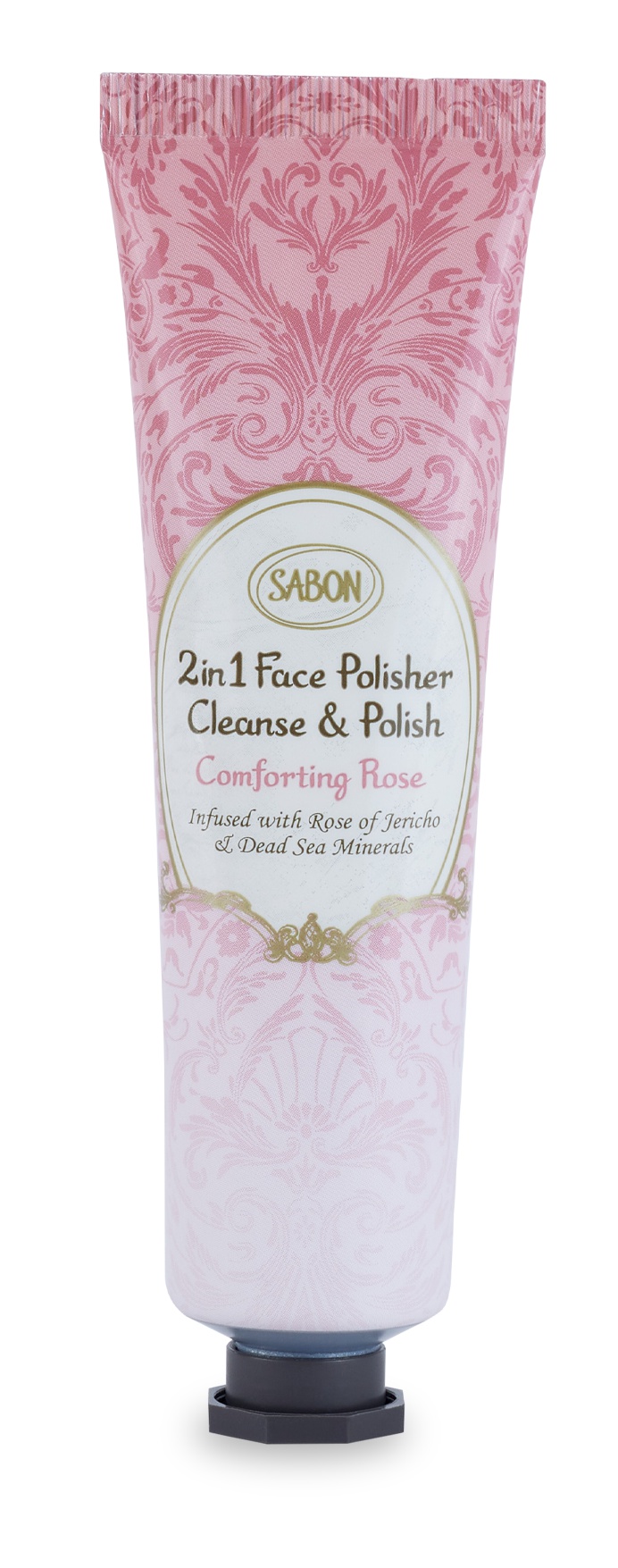
2in1 Face Polisher
Ingredients overview
Highlights
Key Ingredients
Other Ingredients
Skim through
Sabon 2in1 Face PolisherIngredients explained
Good old water, aka H2O. The most common skincare ingredient of all. You can usually find it right in the very first spot of the ingredient list, meaning it’s the biggest thing out of all the stuff that makes up the product.
It’s mainly a solvent for ingredients that do not like to dissolve in oils but rather in water.
Once inside the skin, it hydrates, but not from the outside - putting pure water on the skin (hello long baths!) is drying.
One more thing: the water used in cosmetics is purified and deionized (it means that almost all of the mineral ions inside it is removed). Like this, the products can stay more stable over time.
A clear, colorless oil-like liquid that makes the skin feel smooth and nice (aka emollient) and it does so without it being greasy.
What's more, it can even reduce the heavy, greasy feel in products with high oil content. It's also fast-spreading meaning that it gives the formula a good, nice slip. It absorbs quickly into the skin and helps other ingredients to penetrate quicker and deeper.
Thanks to all this, it's one of the most commonly used emollients out there. There is just one little drawback: it has a high comedogenic index (5 out of 5...), so it might clog pores if you're prone to it.
- It's a helper ingredient that improves the freeze-thaw stability of products
- It's also a solvent, humectant and to some extent a penetration enhancer
- It has a bad reputation among natural cosmetics advocates but cosmetic scientists and toxicology experts do not agree (read more in the geeky details section)
An oily kind of ingredient that can magically blend with water all by itself. This is called self-emulsifying and SE in its name stands for that.
The difference between "normal" Glyceryl Stearate and this guy is that the SE grade contains a small amount of water-loving soap molecules, such as sodium stearate. This increases Glyceryl Stearate's affinity for water and gives it stronger emulsifying abilities.
Other than that, it’s a nice emollient that gives a smooth and soft appearance to the skin.
You can read some more at Glyceryl Stearate >>
A so-called fatty (the good, non-drying kind of) alcohol that does all kinds of things in a skincare product: it makes your skin feel smooth and nice (emollient), helps to thicken up products and also helps water and oil to blend (emulsifier). Can be derived from coconut or palm kernel oil.
A natural polymer (big molecule from repeated subunits) that can be found in the cell wall of green plants. It is a natural and sustainable helper ingredient that can improve the absorption of the formula and it also reduces oiliness on the skin. It is also used as a sensory additive and thickening agent.
A common water-loving surfactant and emulsifier that helps to keep water and oil mixed nicely together.
A chemically modified version of castor oil that results in a solid, waxy material that serves as an emollient and consistency building material.
It also has some unique moisturizing properties as it is both occlusive and humectant. The former one is common for oils and waxes and it means that it sits on top of the skin hindering water to evaporate out of the top layers. The latter one, the humectant property, is surprising and comes from the unique property of ricinoleic acid (the dominant fatty acid in castor oil) having an extra water-loving -OH group on its otherwise oil-loving fatty chain. We have some more info about this at castor oil, so if you are interested, read on here.
Sunflower does not need a big intro as you probably use it in the kitchen as cooking oil, or you munch on the seeds as a healthy snack or you adore its big, beautiful yellow flower during the summer - or you do all of these and probably even more. And by even more we mean putting it all over your face as sunflower oil is one of the most commonly used plant oils in skincare.
It’s a real oldie: expressed directly from the seeds, the oil is used not for hundreds but thousands of years. According to The National Sunflower Association, there is evidence that both the plant and its oil were used by American Indians in the area of Arizona and New Mexico about 3000 BC. Do the math: it's more than 5000 years – definitely an oldie.
Our intro did get pretty big after all (sorry for that), so let's get to the point finally: sunflower oil - similar to other plant oils - is a great emollient that makes the skin smooth and nice and helps to keep it hydrated. It also protects the surface of the skin and enhances the damaged or irritated skin barrier. Leslie Bauman notes in Cosmetic Dermatology that one application of sunflower oil significantly speeds up the recovery of the skin barrier within an hour and sustains the results 5 hours after using it.
It's also loaded with fatty acids (mostly linoleic (50-74%) and oleic (14-35%)). The unrefined version (be sure to use that on your skin!) is especially high in linoleic acid that is great even for acne-prone skin. Its comedogen index is 0, meaning that it's pretty much an all skin-type oil.
Truth be told, there are many great plant oils and sunflower oil is definitely one of them.
 We don't have description for this ingredient yet.
It’s a handy multi-tasking ingredient that gives the skin a nice, soft feel. At the same time, it also boosts the effectiveness of other preservatives, such as the nowadays super commonly used phenoxyethanol.
The blend of these two (caprylyl glycol + phenoxyethanol) is called Optiphen, which not only helps to keep your cosmetics free from nasty things for a long time but also gives a good feel to the finished product. It's a popular duo.
A really multi-functional helper ingredient that can do several things in a skincare product: it can bring a soft and pleasant feel to the formula, it can act as a humectant and emollient, it can be a solvent for some other ingredients (for example it can help to stabilize perfumes in watery products) and it can also help to disperse pigments more evenly in makeup products. And that is still not all: it can also boost the antimicrobial activity of preservatives.
Jojoba-derived emollient wax esters (fatty acid + fatty alcohol) that make your skin feel nice and smooth. Chemically speaking, pure jojoba oil is also a wax ester (read our shiny explanation here), however, the ingredients called jojoba esters on the ingredient lists are made from jojoba oil and/or hydrogenated jojoba oil via interesterification.
They have multiple versions with variable fatty acid chain length and the ingredient can have a liquid, a creamy, a soft or firm paste, or even a hard wax consistency. The common thing between all versions is, that unlike most normal triglyceride oils, jojoba esters have superior stability, provide non-greasy emolliency and are readily absorbed into the skin.
It’s one of those little helper ingredients that makes sure the product stays the same over time. No color change or anything like that. It does so by neutralizing the metal ions in the formula (that usually get into there from water) that would otherwise cause some not so nice changes.
We don't have description for this ingredient yet.
If you have spotted ethylhexylglycerin on the ingredient list, most probably you will see there also the current IT-preservative, phenoxyethanol. They are good friends because ethylhexylglycerin can boost the effectiveness of phenoxyethanol (and other preservatives) and as an added bonus it feels nice on the skin too.
Also, it's an effective deodorant and a medium spreading emollient.
We don't have description for this ingredient yet.
We don't have description for this ingredient yet.
We don't have description for this ingredient yet.
We don't have description for this ingredient yet.
- A natural moisturizer that’s also in our skin
- A super common, safe, effective and cheap molecule used for more than 50 years
- Not only a simple moisturizer but knows much more: keeps the skin lipids between our skin cells in a healthy (liquid crystal) state, protects against irritation, helps to restore barrier
- Effective from as low as 3% with even more benefits for dry skin at higher concentrations up to 20-40%
- High-glycerin moisturizers are awesome for treating severely dry skin
We don't have description for this ingredient yet.
- Primary fat-soluble antioxidant in our skin
- Significant photoprotection against UVB rays
- Vit C + Vit E work in synergy and provide great photoprotection
- Has emollient properties
- Easy to formulate, stable and relatively inexpensive
Citric acid comes from citrus fruits and is an AHA. If these magic three letters don’t tell you anything, click here and read our detailed description on glycolic acid, the most famous AHA.
So citric acid is an exfoliant, that can - just like other AHAs - gently lift off the dead skin cells of your skin and make it more smooth and fresh.
There is also some research showing that citric acid with regular use (think three months and 20% concentration) can help sun-damaged skin, increase skin thickness and some nice hydrating things called glycosaminoglycans in the skin.
But according to a comparative study done in 1995, citric acid has less skin improving magic properties than glycolic or lactic acid. Probably that’s why citric acid is usually not used as an exfoliant but more as a helper ingredient in small amounts to adjust the pH of a formulation.
It's one of those things that help your cosmetics not to go wrong too soon, aka a preservative. It’s not a strong one and doesn’t really work against bacteria, but more against mold and yeast. To do that it has to break down to its active form, sorbic acid. For that to happen, there has to be water in the product and the right pH value (pH 3-4).
But even if everything is right, it’s not enough on its own. If you see potassium sorbate you should see some other preservative next to it too.
BTW, it’s also a food preservative and even has an E number, E202.
A helper ingredient that helps to make the products stay nice longer, aka preservative. It works mainly against fungi.
It’s pH dependent and works best at acidic pH levels (3-5). It’s not strong enough to be used in itself so it’s always combined with something else, often with potassium sorbate.
We don't have description for this ingredient yet.
The essential oil coming from steam distillation of freshly harvested, flowering peppermint sprigs. Its major component is menthol that gives the oil its well-known refreshing and cooling properties. Peppermint oil is traditionally used as an inhalant for cold and coughs and there is also some clinical data validating its use against headaches by rubbing a peppermint oil cream on the forehead.
As for skincare, other than the nice grassy-minty smell and the refreshing sensations, we cannot write good things. It can be a skin irritant, so much so that it is a well-known counterirritant for muscle pains creating mild surface irritation to make things better in the deeper layers. But for everyday skincare, counterirritation is not something you wanna do, so we think that peppermint oil is better to avoid, especially if your skin is sensitive.
Menthol needs no introduction: it's the thing that causes the cooling sensation so well-known both from cosmetic products as well as a bunch of other things like chocolate, chewing gum, toothpaste or cigarette. It's a natural compound that comes from the essential oil of Mentha species (peppermint oil contains 40-50% menthol) and it gives them their typical minty smell and flavor.
As for skincare, menthol seems to be a mixed bag. Apart from the cool cooling sensation (that might last up to 70 mins!), it also has painkilling, itch reducing, antibacterial, antifungal and even penetration enhancing properties. On the other hand, it also seems to act as a skin irritant that increases trans-epidermal water loss (the water that evaporates from the outer layer of the skin) and thus contributes to drying out the skin.
We don't have description for this ingredient yet.
The essential oil created by steam distilling the leaves of the Eucalyptus tree. It's a colorless, pale yellow oil with a camphoraceous aroma used traditionally in vapor rubs to treat coughs. Its name-giving main component is eucalyptol (also called 1,8-cineole, 80-91%) that has significant antibacterial and expectorant properties.
Among essential oils, Eucalyptus Globulus counts as rather non-sensitising with an EU sensitizer total of 5% (due to limonene). However, if your skin is super-sensitive or you are allergic to fragrances, it is still better to avoid it.
A super common and cheap fragrance ingredient. It's in many plants, e.g. rosemary, eucalyptus, lavender, lemongrass, peppermint and it's the main component (about 50-90%) of the peel oil of citrus fruits.
It does smell nice but the problem is that it oxidizes on air exposure and the resulting stuff is not good for the skin. Oxidized limonene can cause allergic contact dermatitis and counts as a frequent skin sensitizer.
Limonene's nr1 function is definitely being a fragrance component, but there are several studies showing that it's also a penetration enhancer, mainly for oil-loving components.
All in all, limonene has some pros and cons, but - especially if your skin is sensitive - the cons probably outweigh the pros.
An inorganic (as in no carbon in its molecule, it is Cr2O3X(OH), the hydrated version of this guy) pigment that gives blue-green shades. It is not permitted in lip products in the US.
You may also want to take a look at...
| what‑it‑does | solvent |
| what‑it‑does | emollient | perfuming |
| irritancy, com. | 3, 3-5 |
| what‑it‑does | moisturizer/humectant | solvent |
| irritancy, com. | 0, 0 |
| what‑it‑does | emulsifying |
| irritancy, com. | 2, 3 |
| what‑it‑does | emollient | viscosity controlling |
| irritancy, com. | 2, 2 |
| what‑it‑does | viscosity controlling |
| what‑it‑does | emulsifying | surfactant/cleansing |
| what‑it‑does | emollient | viscosity controlling | emulsifying | surfactant/cleansing |
| irritancy, com. | 0, 1 |
| what‑it‑does | emollient |
| irritancy, com. | 0, 0 |
| what‑it‑does | viscosity controlling |
| what‑it‑does | moisturizer/humectant | emollient |
| what‑it‑does | solvent |
| what‑it‑does | soothing | emollient | moisturizer/humectant |
| what‑it‑does | chelating |
| what‑it‑does | emulsifying |
| what‑it‑does | emollient |
| what‑it‑does | antimicrobial/antibacterial |
| what‑it‑does | preservative |
| what‑it‑does | perfuming |
| what‑it‑does | skin-identical ingredient | moisturizer/humectant |
| irritancy, com. | 0, 0 |
| what‑it‑does | antioxidant |
| irritancy, com. | 0-3, 0-3 |
| what‑it‑does | buffering |
| what‑it‑does | preservative |
| what‑it‑does | preservative |
| what‑it‑does | perfuming |
| what‑it‑does | soothing |
| what‑it‑does | perfuming | antimicrobial/antibacterial |
| what‑it‑does | perfuming | solvent |
| what‑it‑does | perfuming |
| what‑it‑does | colorant |