





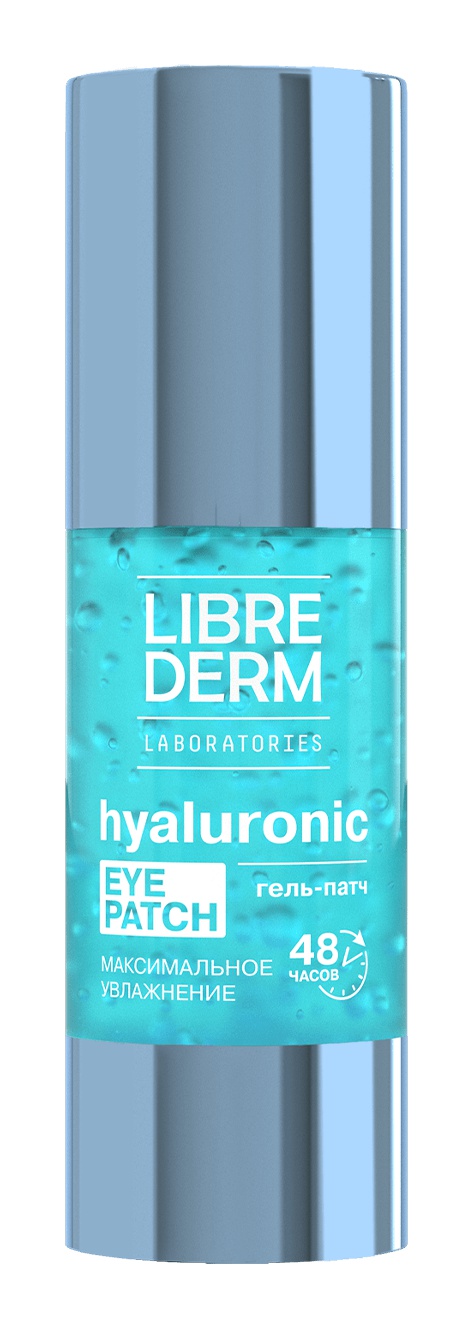
Ingredients overview
Highlights
Key Ingredients
Other Ingredients
Skim through
Librederm Maximum HydrationIngredients explained
Good old water, aka H2O. The most common skincare ingredient of all. You can usually find it right in the very first spot of the ingredient list, meaning it’s the biggest thing out of all the stuff that makes up the product.
It’s mainly a solvent for ingredients that do not like to dissolve in oils but rather in water.
Once inside the skin, it hydrates, but not from the outside - putting pure water on the skin (hello long baths!) is drying.
One more thing: the water used in cosmetics is purified and deionized (it means that almost all of the mineral ions inside it is removed). Like this, the products can stay more stable over time.
- A natural moisturizer that’s also in our skin
- A super common, safe, effective and cheap molecule used for more than 50 years
- Not only a simple moisturizer but knows much more: keeps the skin lipids between our skin cells in a healthy (liquid crystal) state, protects against irritation, helps to restore barrier
- Effective from as low as 3% with even more benefits for dry skin at higher concentrations up to 20-40%
- High-glycerin moisturizers are awesome for treating severely dry skin
A pre-neutralised form of super common thickener, Carbomer. This means that it forms viscous gels immediately upon addition to water (while Carbomer has to be neutralized with a base), but it can also be harder to disperse evenly in the formula.
A type of sugar that has water-binding properties and helps to keep your skin hydrated.
Yes, it's the thing that can be found naturally in pee. And in the skin. It is an awesome natural moisturizing factor, aka NMF. NMFs are important components that help the skin to hold onto water and keep it plump, elastic and hydrated. Urea makes up about 7% of NMFs next to other things such as amino acids (40%), PCA (12%) or Lactate (12%).
What makes urea special, is that it is not only a simple moisturizer, but it is thought to be a "small-molecule regulator of epidermal structure and function" meaning that it has a bunch of extra biological activities. It acts as a mild keratolytic agent (some of its moisturizing action is thought to come from urea's ability to break down bonds in the protein called filaggrin and thus freeing up amino acids in the skin), enhances antimicrobial peptide expression and improves skin barrier function.
Being a mild keratolytic agent and strong moisturizer means that high-percentage (10-40%) urea treatments are found effective in a bunch of skin disorders connected to excessive dryness and malfunctioning skin barrier such as ichthyosis, xerosis, psoriasis, eczema and seborrheic dermatitis.
Overall, just like glycerin, urea is a real oldie but a goodie, a nice ingredient in any moisturizer.
Serine is an amino acid that most often comes to the formula as part of a moisturizing complex. It's a non-essential amino acid (meaning that our body can synthesize it) and serves as a water-binding ingredient.
In general, amino acids are great skincare ingredients that play an important role in proper skin hydration but there is not much info out there about what specifically serine can do for the skin.
A large sugar molecule (aka polysaccharide) that's used as a gelling agent and comes from brown seaweed.
Combined with calcium salts, it forms a rigid gel used in "rubber masks".
It’s the - sodium form - cousin of the famous NMF, hyaluronic acid (HA). If HA does not tell you anything we have a super detailed, geeky explanation about it here. The TL; DR version of HA is that it's a huge polymer (big molecule from repeated subunits) found in the skin that acts as a sponge helping the skin to hold onto water, being plump and elastic. HA is famous for its crazy water holding capacity as it can bind up to 1000 times its own weight in water.
As far as skincare goes, sodium hyaluronate and hyaluronic acid are pretty much the same and the two names are used interchangeably. As cosmetic chemist kindofstephen writes on reddit "sodium hyaluronate disassociates into hyaluronic acid molecule and a sodium atom in solution".
In spite of this, if you search for "hyaluronic acid vs sodium hyaluronate" you will find on multiple places that sodium hyaluronate is smaller and can penetrate the skin better. Chemically, this is definitely not true, as the two forms are almost the same, both are polymers and the subunits can be repeated in both forms as much as you like. (We also checked Prospector for sodium hyaluronate versions actually used in cosmetic products and found that the most common molecular weight was 1.5-1.8 million Da that absolutely counts as high molecular weight).
What seems to be a true difference, though, is that the salt form is more stable, easier to formulate and cheaper so it pops up more often on the ingredient lists.
If you wanna become a real HA-and-the-skin expert you can read way more about the topic at hyaluronic acid (including penetration-questions, differences between high and low molecular weight versions and a bunch of references to scientific literature).
A common little helper ingredient that helps water and oil to mix together, aka emulsifier.
The number at the end refers to the oil-loving part and the bigger the number the more emulsifying power it has. 20 is a weak emulsifier, rather called solubilizer used commonly in toners while 60 and 80 are more common in serums and creams.
A multi-functional, silky feeling helper ingredient that can do quite many things. It's used as an emulsion stabilizer, solvent and a broad spectrum antimicrobial. According to manufacturer info, it's also a moisturizer and helps to make the product feel great on the skin. It works synergistically with preservatives and helps to improve water-resistance of sunscreens.
 We don't have description for this ingredient yet.
It’s a handy multi-tasking ingredient that gives the skin a nice, soft feel. At the same time, it also boosts the effectiveness of other preservatives, such as the nowadays super commonly used phenoxyethanol.
The blend of these two (caprylyl glycol + phenoxyethanol) is called Optiphen, which not only helps to keep your cosmetics free from nasty things for a long time but also gives a good feel to the finished product. It's a popular duo.
If you ever wondered what those little Listerine breath strips were made of, you found your answer! Pullulan is a polysaccharide polymer, which basically means that it’s a big molecule made up of smaller sugar molecule units.
It dissolves in water and can make a thin, elastic, and moisture-absorbing film when spread on the skin that can cause an instant tightening effect. It can also be used as a thickener to get a silicone-like feel and can be used in peel-off masks. Btw, it's made from fungus via fermentation.
A four amino acid peptide that is claimed to improve puffy eye bags via its anti-oedema and anti-glycation effects.
To back this claim up, the manufacturer created an in-vivo study with 20 volunteers using 10% of EYESERYL (that comes down to 0.01% (!) of the pure peptide) and found that by day 15, 70% of the volunteers improved, while 95% of the volunteers improved by the end of the study (60 days). About third of them improved only slightly, third of them showed an ok improvement and third showed a good improvement. They also have pretty convincing before and after photos, so we can tell you that for the lucky ones, the improvement can be real and visible.
But, the thing is that puffiness around the eyes can have multiple reasons and one of the major ones is fat accumulation that might happen as we age. No miracle cream or ingredient can do much about that, however, another common reason is water accumulation. If the reason behind your eye bags is this latter one, trying an eye cream with Acetyl Tetrapeptide-5 can be a good idea and might bring nice improvements.
Exactly what it sounds: nice smelling stuff put into cosmetic products so that the end product also smells nice. Fragrance in the US and parfum in the EU is a generic term on the ingredient list that is made up of 30 to 50 chemicals on average (but it can have as much as 200 components!).
If you are someone who likes to know what you put on your face then fragrance is not your best friend - there's no way to know what’s really in it.
Also, if your skin is sensitive, fragrance is again not your best friend. It’s the number one cause of contact allergy to cosmetics. It’s definitely a smart thing to avoid with sensitive skin (and fragrance of any type - natural is just as allergic as synthetic, if not worse!).
It's one of those things that help your cosmetics not to go wrong too soon, aka a preservative. It can be naturally found in fruits and teas but can also be made synthetically.
No matter the origin, in small amounts (up to 1%) it’s a nice, gentle preservative. Has to be combined with some other nice preservatives, like potassium sorbate to be broad spectrum enough.
In high amounts, it can be a skin irritant, but don’t worry, it’s never used in high amounts.
- It's one of the gold standard ingredients for treating problem skin
- It can exfoliate skin both on the surface and in the pores
- It's a potent anti-inflammatory agent
- It's more effective for treating blackheads than acne
- For acne combine it with antibacterial agents like benzoyl peroxide or azelaic acid
A mild, natural preservative that usually comes to the formula together with its other mild preservative friends, such as Benzoic Acid and/or Dehydroacetic Acid. Btw, it's also used as a food preservative.
A little helper ingredient that works as a preservative. It works against bacteria and some species of fungi and yeast. It's often combined with IT-preservative, phenoxyethanol.
A handy helper ingredient that helps products to remain nice and stable for a longer time. It does so by neutralizing the metal ions in the formula (that usually get into there from water) that would otherwise cause some not so nice changes.
The unfancy name for it is lye. It’s a solid white stuff that’s very alkaline and used in small amounts to adjust the pH of the product and make it just right.
For example, in case of AHA or BHA exfoliants, the right pH is super-duper important, and pH adjusters like sodium hydroxide are needed.
BTW, lye is not something new. It was already used by ancient Egyptians to help oil and fat magically turn into something else. Can you guess what? Yes, it’s soap. It still often shows up in the ingredient list of soaps and other cleansers.
Sodium hydroxide in itself is a potent skin irritant, but once it's reacted (as it is usually in skin care products, like exfoliants) it is totally harmless.
It’s a little helper ingredient that helps to set the pH of a cosmetic formulation to be just right.
CI 42090 or Blue 1 is a super common synthetic colorant in beauty & food. Used alone, it adds a brilliant smurf-like blue color, combined with Tartrazine, it gives the fifty shades of green.
You may also want to take a look at...
| what‑it‑does | solvent |
| what‑it‑does | skin-identical ingredient | moisturizer/humectant |
| irritancy, com. | 0, 0 |
| what‑it‑does | viscosity controlling |
| what‑it‑does | moisturizer/humectant |
| what‑it‑does | skin-identical ingredient | moisturizer/humectant |
| what‑it‑does | skin-identical ingredient |
| what‑it‑does | viscosity controlling |
| irritancy, com. | 4, 4 |
| what‑it‑does | skin-identical ingredient | moisturizer/humectant |
| irritancy, com. | 0, 0 |
| what‑it‑does | emulsifying | surfactant/cleansing |
| irritancy, com. | 0, 0 |
| what‑it‑does | solvent | moisturizer/humectant |
| what‑it‑does | moisturizer/humectant | emollient |
| what‑it‑does | cell-communicating ingredient | moisturizer/humectant |
| what‑it‑does | perfuming |
| what‑it‑does | preservative | perfuming | solvent | viscosity controlling |
| what‑it‑does | exfoliant | anti-acne | soothing | preservative |
| what‑it‑does | preservative |
| what‑it‑does | preservative | antimicrobial/antibacterial |
| what‑it‑does | chelating |
| what‑it‑does | buffering |
| what‑it‑does | buffering |
| what‑it‑does | buffering |
| what‑it‑does | colorant |