





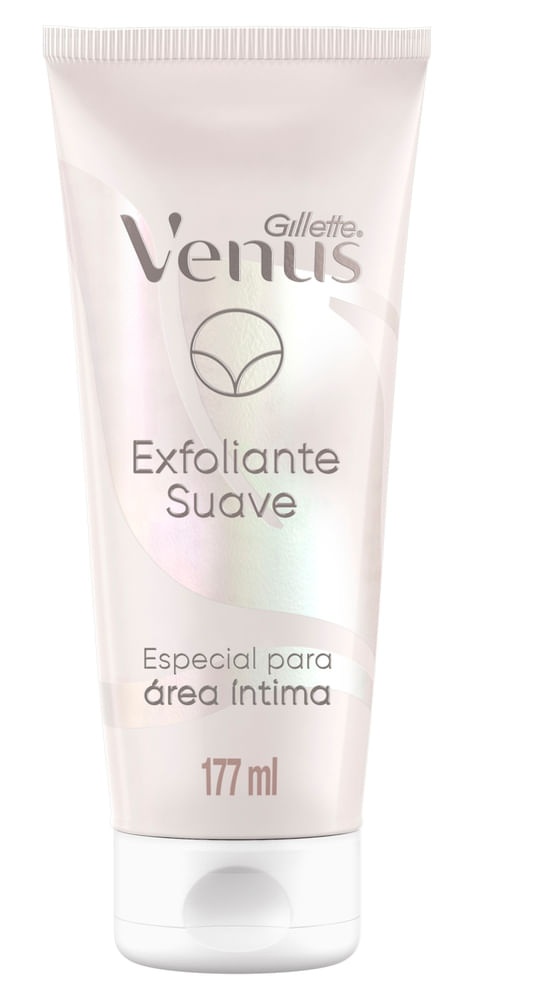
Esfoliante Suave Para Área Íntima
Ingredients overview
Highlights
Key Ingredients
Other Ingredients
Skim through
Gilette Esfoliante Suave Para Área ÍntimaIngredients explained
Good old water, aka H2O. The most common skincare ingredient of all. You can usually find it right in the very first spot of the ingredient list, meaning it’s the biggest thing out of all the stuff that makes up the product.
It’s mainly a solvent for ingredients that do not like to dissolve in oils but rather in water.
Once inside the skin, it hydrates, but not from the outside - putting pure water on the skin (hello long baths!) is drying.
One more thing: the water used in cosmetics is purified and deionized (it means that almost all of the mineral ions inside it is removed). Like this, the products can stay more stable over time.
The sodium salt of lactic acid. It's a great skin moisturizer and also used to regulate the pH value of the cosmetic formula. It's a natural ingredient approved by both ECOCERT and COSMOS.
A mild amphoteric (contains both a negative and a positive ion in its water-loving head part) surfactant that gives a nice foam and also has the unique ability to reduce irritation from other co-surfactants.
 We don't have description for this ingredient yet.
We don't have description for this ingredient yet.
We don't have description for this ingredient yet.
We don't have description for this ingredient yet.
A 12 carbon length fatty acid that can be found naturally in coconut milk, coconut oil, laurel oil, and palm kernel oil. It's also in breast milk. As a skincare ingredient, it can be used as an emulsifier or as a cleansing agent.
What's more, there is emerging research about lauric acid being a good anti-acne ingredient. A 2009 study found that the lowest concentration to prevent evil acne-causing P. acnes growth of lauric acid is over 15 times lower than that of gold standard anti-acne ingredient benzoyl peroxide.
Though the studies are only in-vitro (made in the lab, not on real people), and it also has a high comedogenicity index, it might be worth a try if you are prone to inflamed acne (the type that's caused by P. acnes bacteria).
A versatile and biodegradable cleansing agent with high cleaning power and strong foaming properties. Unfortunately, these two properties for a surfactant usually mean that it is harsh on the skin, which is the case here as well.
- A natural moisturizer that’s also in our skin
- A super common, safe, effective and cheap molecule used for more than 50 years
- Not only a simple moisturizer but knows much more: keeps the skin lipids between our skin cells in a healthy (liquid crystal) state, protects against irritation, helps to restore barrier
- Effective from as low as 3% with even more benefits for dry skin at higher concentrations up to 20-40%
- High-glycerin moisturizers are awesome for treating severely dry skin
It's a sweet tasting sugar substitute that helps your skin to hold onto water when used in cosmetic products. It also helps to thicken up products and give them a bit more slip.
It's a sweet tasting sugar substitute that helps your skin to hold onto water when used in cosmetic products. It also helps to thicken up products and give them a bit more slip.
This ingredient name is not according to the INCI-standard. :( What, why?!
A big polymer molecule that has a bunch of different versions and thus different uses. It can act as a film former, as a thickening agent, or it can increase the water-resistance in sunscreens. It is also used to entrap pigments/inorganic sunscreens within a micron size matrix for even coverage and easy application.
Propanediol is a natural alternative for the often used and often bad-mouthed propylene glycol. It's produced sustainably from corn sugar and it's Ecocert approved.
It's quite a multi-tasker: can be used to improve skin moisturization, as a solvent, to boost preservative efficacy or to influence the sensory properties of the end formula.
- It’s the second most researched AHA after glycolic acid
- It gently lifts off dead skin cells to reveal newer, fresher, smoother skin
- It also has amazing skin hydrating properties
- In higher concentration (10% and up) it improves skin firmness, thickness and wrinkles
- Choose a product where you know the concentration and pH value because these two greatly influence effectiveness
- Don’t forget to use your sunscreen (in any case but especially so next to an AHA product)
This ingredient name is not according to the INCI-standard. :( What, why?!
Citric acid comes from citrus fruits and is an AHA. If these magic three letters don’t tell you anything, click here and read our detailed description on glycolic acid, the most famous AHA.
So citric acid is an exfoliant, that can - just like other AHAs - gently lift off the dead skin cells of your skin and make it more smooth and fresh.
There is also some research showing that citric acid with regular use (think three months and 20% concentration) can help sun-damaged skin, increase skin thickness and some nice hydrating things called glycosaminoglycans in the skin.
But according to a comparative study done in 1995, citric acid has less skin improving magic properties than glycolic or lactic acid. Probably that’s why citric acid is usually not used as an exfoliant but more as a helper ingredient in small amounts to adjust the pH of a formulation.
This ingredient name is not according to the INCI-standard. :( What, why?!
Super common little helper ingredient that helps products to remain nice and stable for a longer time. It does so by neutralizing the metal ions in the formula (that usually get into there from water) that would otherwise cause some not so nice changes.
It is typically used in tiny amounts, around 0.1% or less.
We don't have description for this ingredient yet.
We don't have description for this ingredient yet.
A cleansing agent that's described by multiple manufacturers as a very mild, non-irritating surfactant but with great foam properties. It's recommended for gentle cleansers suitable for sensitive or baby skin.
A cleansing agent that's described by multiple manufacturers as a very mild, non-irritating surfactant but with great foam properties. It's recommended for gentle cleansers suitable for sensitive or baby skin.
The essential oil coming from steam distillation of freshly harvested, flowering peppermint sprigs. Its major component is menthol that gives the oil its well-known refreshing and cooling properties. Peppermint oil is traditionally used as an inhalant for cold and coughs and there is also some clinical data validating its use against headaches by rubbing a peppermint oil cream on the forehead.
As for skincare, other than the nice grassy-minty smell and the refreshing sensations, we cannot write good things. It can be a skin irritant, so much so that it is a well-known counterirritant for muscle pains creating mild surface irritation to make things better in the deeper layers. But for everyday skincare, counterirritation is not something you wanna do, so we think that peppermint oil is better to avoid, especially if your skin is sensitive.
Menthol needs no introduction: it's the thing that causes the cooling sensation so well-known both from cosmetic products as well as a bunch of other things like chocolate, chewing gum, toothpaste or cigarette. It's a natural compound that comes from the essential oil of Mentha species (peppermint oil contains 40-50% menthol) and it gives them their typical minty smell and flavor.
As for skincare, menthol seems to be a mixed bag. Apart from the cool cooling sensation (that might last up to 70 mins!), it also has painkilling, itch reducing, antibacterial, antifungal and even penetration enhancing properties. On the other hand, it also seems to act as a skin irritant that increases trans-epidermal water loss (the water that evaporates from the outer layer of the skin) and thus contributes to drying out the skin.
We don't have description for this ingredient yet.
This ingredient name is not according to the INCI-standard. :( What, why?!
The oil coming from the seeds of the carrot, the orange root vegetable we all know and eat regularly. This oil is a really tricky one, as it can refer to two types of oil that can both be extracted from the carrot seeds: the essential oil (about 0.83% yield) and the fixed oil (about 7.84% yield).
The two seed oils are very different and to make matters even worse these two oils are also very different from carrot root oil, or carrot oil, that is basically carrot root extract macerated in a carrier oil such as sunflower or olive oil and is the one that contains the vitamin A precursor, carotene.
Let's start with the fixed oil: it's a nice emollient plant oil that is loaded with moisturizing fatty acids (petroselinic acid - 60% and linoleic acid - 12% are the main ones). Other important components are carotol (30%) and daucol (12%) that give the seed oil antifungal and antioxidant properties. Browsing cosmetic manufacturer info, the oil is also often described as revitalizing, toning and stimulating.
As for the essential oil, it is a light yellow colored oil with a rich, spicy and earthy fragrance. Its main component is carotol (about 65%) but similar to other essential oils, it is a chemically complex mixture with lots of compounds in small amounts. The essential oil also has antifungal and antioxidant properties but also contains fragrant components that might irritate sensitive skin types.
There is definitely some craze going on for coconut oil both in the healthy eating space (often claimed to be the healthiest oil to cook with but this is a topic for another site) and in the skin and hair care space.
We will talk here about the latter two and see why we might want to smear it all over ourselves. Chemically speaking, coconut oil has a unique fatty acid profile. Unlike many plant oils that mostly contain unsaturated fatty acids (fatty acids with double bonds and kinky structure such as linoleic or oleic), coconut oil is mostly saturated (fatty acids with single bonds only) and its most important fatty acid is Lauric Acid (about 50%). Saturated fatty acids have a linear structure that can stack nice and tight and hence they are normally solid at room temperature. Coconut oil melts around 25 °C so it is solid in the tub but melts on contact with the skin.
The saturated nature of coconut oil also means that it is a heavy-duty-oil ideal for dry skin types. A double-blind research confirmed that extra virgin coconut oil is as effective in treating xerosis (aka very dry skin) as mineral oil. Another study found that coconut oil is more effective than mineral oil in treating mild to moderate atopic dermatitis (aka eczema) in children.
So when it comes to dry skin, coconut oil is a goodie, no question there. The question is if it is good or bad for acne-prone skin. Its main fatty acid, Lauric Acid has some research showing that it is a promising ingredient against evil acne-causing bacteria, P. acnes but at the same time, both Lauric Acid and coconut oil have a very high comedogenic rating (4 out of 5). Though comedogenic ratings are not very reliable, anecdotal evidence (i.e. people commenting in forums) shows that people have mixed experiences. While some claim that it worked wonders on their acne others say that it gave them serious blackheads and zits. Try it at your own risk.
As for hair care, coconut oil has pretty solid research showing that it can penetrate into the hair very well (better than mineral oil and sunflower oil) and it can prevent hair protein loss as well as combing damage. If you have problems with damaged hair, split ends, coconut oil is worth trying as a pre- or/and post-wash treatment. Labmuffin has an awesome blogpost explaining in more detail why coconut oil is good for your hair.
A couple of other things worth mentioning: coconut oil might help with wound healing (promising animal study), it has some antifungal activity (against dermatophytes that cause the thing known as ringworm) and it also works as an insect repellent against black flies.
Overall, coconut oil is definitely a goodie for the hair and dry skin. If that warrants for the magic oil status it enjoys, we don't know.
There is definitely some craze going on for coconut oil both in the healthy eating space (often claimed to be the healthiest oil to cook with but this is a topic for another site) and in the skin and hair care space.
We will talk here about the latter two and see why we might want to smear it all over ourselves. Chemically speaking, coconut oil has a unique fatty acid profile. Unlike many plant oils that mostly contain unsaturated fatty acids (fatty acids with double bonds and kinky structure such as linoleic or oleic), coconut oil is mostly saturated (fatty acids with single bonds only) and its most important fatty acid is Lauric Acid (about 50%). Saturated fatty acids have a linear structure that can stack nice and tight and hence they are normally solid at room temperature. Coconut oil melts around 25 °C so it is solid in the tub but melts on contact with the skin.
The saturated nature of coconut oil also means that it is a heavy-duty-oil ideal for dry skin types. A double-blind research confirmed that extra virgin coconut oil is as effective in treating xerosis (aka very dry skin) as mineral oil. Another study found that coconut oil is more effective than mineral oil in treating mild to moderate atopic dermatitis (aka eczema) in children.
So when it comes to dry skin, coconut oil is a goodie, no question there. The question is if it is good or bad for acne-prone skin. Its main fatty acid, Lauric Acid has some research showing that it is a promising ingredient against evil acne-causing bacteria, P. acnes but at the same time, both Lauric Acid and coconut oil have a very high comedogenic rating (4 out of 5). Though comedogenic ratings are not very reliable, anecdotal evidence (i.e. people commenting in forums) shows that people have mixed experiences. While some claim that it worked wonders on their acne others say that it gave them serious blackheads and zits. Try it at your own risk.
As for hair care, coconut oil has pretty solid research showing that it can penetrate into the hair very well (better than mineral oil and sunflower oil) and it can prevent hair protein loss as well as combing damage. If you have problems with damaged hair, split ends, coconut oil is worth trying as a pre- or/and post-wash treatment. Labmuffin has an awesome blogpost explaining in more detail why coconut oil is good for your hair.
A couple of other things worth mentioning: coconut oil might help with wound healing (promising animal study), it has some antifungal activity (against dermatophytes that cause the thing known as ringworm) and it also works as an insect repellent against black flies.
Overall, coconut oil is definitely a goodie for the hair and dry skin. If that warrants for the magic oil status it enjoys, we don't know.
Citric acid comes from citrus fruits and is an AHA. If these magic three letters don’t tell you anything, click here and read our detailed description on glycolic acid, the most famous AHA.
So citric acid is an exfoliant, that can - just like other AHAs - gently lift off the dead skin cells of your skin and make it more smooth and fresh.
There is also some research showing that citric acid with regular use (think three months and 20% concentration) can help sun-damaged skin, increase skin thickness and some nice hydrating things called glycosaminoglycans in the skin.
But according to a comparative study done in 1995, citric acid has less skin improving magic properties than glycolic or lactic acid. Probably that’s why citric acid is usually not used as an exfoliant but more as a helper ingredient in small amounts to adjust the pH of a formulation.
You may also want to take a look at...
| what‑it‑does | solvent |
| what‑it‑does | buffering | moisturizer/humectant |
| what‑it‑does | surfactant/cleansing |
| what‑it‑does | surfactant/cleansing | viscosity controlling |
| what‑it‑does | surfactant/cleansing | viscosity controlling |
| what‑it‑does | emulsifying | surfactant/cleansing |
| what‑it‑does | surfactant/cleansing | viscosity controlling | emulsifying |
| what‑it‑does | anti-acne | surfactant/cleansing | emulsifying |
| irritancy, com. | 1, 4 |
| what‑it‑does | surfactant/cleansing |
| what‑it‑does | skin-identical ingredient | moisturizer/humectant |
| irritancy, com. | 0, 0 |
| what‑it‑does | moisturizer/humectant |
| irritancy, com. | 0, 0 |
| what‑it‑does | moisturizer/humectant |
| irritancy, com. | 0, 0 |
| what‑it‑does | viscosity controlling |
| what‑it‑does | solvent | moisturizer/humectant |
| what‑it‑does | exfoliant | moisturizer/humectant | buffering |
| what‑it‑does | buffering |
| what‑it‑does | chelating |
| what‑it‑does | surfactant/cleansing | emollient | viscosity controlling |
| what‑it‑does | emollient | moisturizer/humectant |
| what‑it‑does | surfactant/cleansing |
| what‑it‑does | surfactant/cleansing |
| what‑it‑does | perfuming |
| what‑it‑does | soothing |
| what‑it‑does | emollient |
| what‑it‑does | emollient | perfuming |
| irritancy, com. | 0, 4 |
| what‑it‑does | emollient | perfuming |
| irritancy, com. | 0, 4 |
| what‑it‑does | buffering |