





Ingredients overview
Highlights
Key Ingredients
Other Ingredients
Skim through
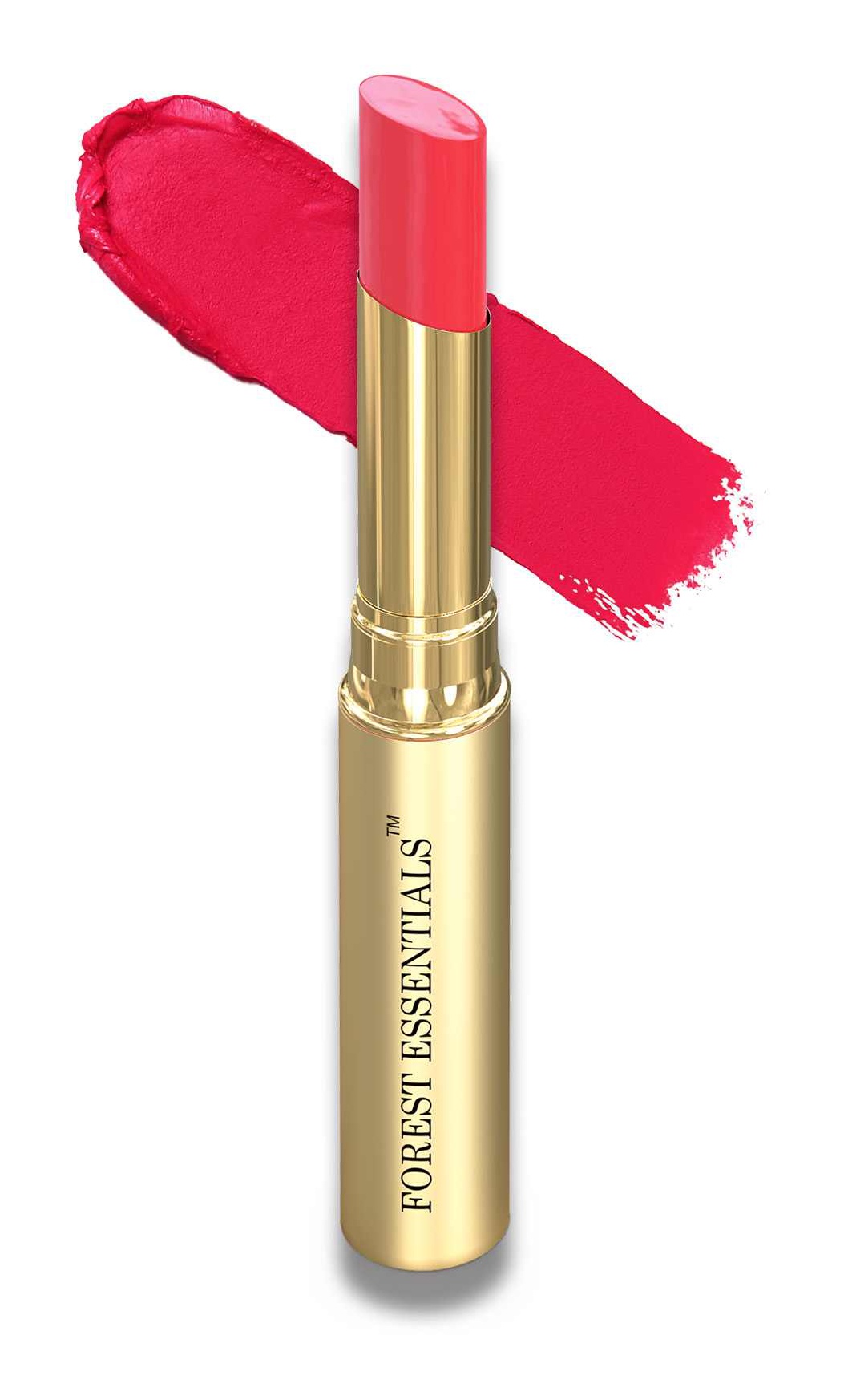
Forest Essentials Madhu Rasa Tinted Lip Serum Gulab JalIngredients explained
There is definitely some craze going on for coconut oil both in the healthy eating space (often claimed to be the healthiest oil to cook with but this is a topic for another site) and in the skin and hair care space.
We will talk here about the latter two and see why we might want to smear it all over ourselves. Chemically speaking, coconut oil has a unique fatty acid profile. Unlike many plant oils that mostly contain unsaturated fatty acids (fatty acids with double bonds and kinky structure such as linoleic or oleic), coconut oil is mostly saturated (fatty acids with single bonds only) and its most important fatty acid is Lauric Acid (about 50%). Saturated fatty acids have a linear structure that can stack nice and tight and hence they are normally solid at room temperature. Coconut oil melts around 25 °C so it is solid in the tub but melts on contact with the skin.
The saturated nature of coconut oil also means that it is a heavy-duty-oil ideal for dry skin types. A double-blind research confirmed that extra virgin coconut oil is as effective in treating xerosis (aka very dry skin) as mineral oil. Another study found that coconut oil is more effective than mineral oil in treating mild to moderate atopic dermatitis (aka eczema) in children.
So when it comes to dry skin, coconut oil is a goodie, no question there. The question is if it is good or bad for acne-prone skin. Its main fatty acid, Lauric Acid has some research showing that it is a promising ingredient against evil acne-causing bacteria, P. acnes but at the same time, both Lauric Acid and coconut oil have a very high comedogenic rating (4 out of 5). Though comedogenic ratings are not very reliable, anecdotal evidence (i.e. people commenting in forums) shows that people have mixed experiences. While some claim that it worked wonders on their acne others say that it gave them serious blackheads and zits. Try it at your own risk.
As for hair care, coconut oil has pretty solid research showing that it can penetrate into the hair very well (better than mineral oil and sunflower oil) and it can prevent hair protein loss as well as combing damage. If you have problems with damaged hair, split ends, coconut oil is worth trying as a pre- or/and post-wash treatment. Labmuffin has an awesome blogpost explaining in more detail why coconut oil is good for your hair.
A couple of other things worth mentioning: coconut oil might help with wound healing (promising animal study), it has some antifungal activity (against dermatophytes that cause the thing known as ringworm) and it also works as an insect repellent against black flies.
Overall, coconut oil is definitely a goodie for the hair and dry skin. If that warrants for the magic oil status it enjoys, we don't know.
The oil coming from the seeds of the Moringa tree, a big white-flowered tree native to India. It's a yellow oil similar to olive oil. It's rich in nourishing and moisturizing fatty acid, oleic (75%) and also contains behenic acid (up to 8%) that makes moringa very stable and gives the oil a long shelf life.
It blends easily with essential oils and can also help to stabilize scents so it's a popular oil in the perfume industry.
The emollient plant oil that comes from almonds. Similar to other plant oils, it is loaded with skin-nourishing fatty acids (oleic acid - 55-86% and linoleic acid 7-35%) and contains several other skin goodies such as antioxidant vitamin E and vitamin B versions.
It's a nice, basic oil that is often used due to its great smoothing, softening and moisturizing properties. It's also particularly good at treating dry brittle nails (source).
We are big fans of all kinds of roses as ornamental plants but when it comes to skincare, it is a mixed bag. Before we list out the good and the not so good, here is an interesting thing.
The oil content in rose is very, very low so distilling rose essential oil requires huge amounts of rose flowers. It has such a wonderful scent that there are no comparable synthetic alternatives. You can probably guess that this means rose essential oil is expensive.... very very expensive.
So the good things: thanks to its wonderful scent the high-end perfume industry loves rose oil. Also, we (humans :)) love rose oil. We love its scent so much that it can heal headaches, depression, stress, and even grief.
Rose oil contains more than 95 compounds, among them flavonoids, anthocyanins, vitamin C, and quercetin that are all known for their medicinal properties and great antioxidant effects. Similar to many other essential oils, it has antimicrobial properties too.
Now, the not-so-good thing? Out of the 95 compounds, the major ones are citronellol and geraniol, fragrant components that might irritate sensitive skin.
 We don't have description for this ingredient yet.
We don't have description for this ingredient yet.
You might know licorice as a sweet treat from your childhood, but it's actually a legume that grows around the Mediterranean Sea, the Middle East, central and southern Russia. It's sweet and yellow and not only used for licorice all sorts but it's also a skincare superstar thanks to two magic properties:
Nr. 1 magic property is that it has skin-lightening or to say it another way depigmenting properties. The most active part is called glabridin. The topical application (meaning when you put it on your face) of 0.5% glabridin was shown to inhibit UVB caused pigmentation of guinea pigs. Another study even suggested that licorice is more effective than the gold standard skin-lightening agent hydroquinone. All in all, licorice is considered to be one of the safest skin lightening agents with the fewest side effects.
There is just one catch regarding glabridin and licorice: the amount of glabridin in commercial licorice extracts can vary a lot. We have seen extracts with only 4% glabridin as well as 40% glabridin. The latter one is a very-very expensive ingredient, so if you are after the depigmenting properties try to choose a product that boasts its high-quality licorice extract.
Nr. 2 magic property is that licorice is a potent anti-inflammatory. Glabridin has also some soothing properties but the main active anti-inflammatory component is glycyrrhizin. It’s used to treat several skin diseases that are connected to inflammation including atopic dermatitis, rosacea or eczema.
Oh, and one more thing: glabridin seems to be also an antioxidant, which is just one more reason to be happy about licorice root extract on an ingredient list.
Bottom line: Licorice is a great skincare ingredient with significant depigmenting, anti-inflammatory and even some antioxidant properties. Be happy if it's on the ingredient list. :)
We don't have description for this ingredient yet.
We don't have description for this ingredient yet.
We don't have description for this ingredient yet.
Sunflower does not need a big intro as you probably use it in the kitchen as cooking oil, or you munch on the seeds as a healthy snack or you adore its big, beautiful yellow flower during the summer - or you do all of these and probably even more. And by even more we mean putting it all over your face as sunflower oil is one of the most commonly used plant oils in skincare.
It’s a real oldie: expressed directly from the seeds, the oil is used not for hundreds but thousands of years. According to The National Sunflower Association, there is evidence that both the plant and its oil were used by American Indians in the area of Arizona and New Mexico about 3000 BC. Do the math: it's more than 5000 years – definitely an oldie.
Our intro did get pretty big after all (sorry for that), so let's get to the point finally: sunflower oil - similar to other plant oils - is a great emollient that makes the skin smooth and nice and helps to keep it hydrated. It also protects the surface of the skin and enhances the damaged or irritated skin barrier. Leslie Bauman notes in Cosmetic Dermatology that one application of sunflower oil significantly speeds up the recovery of the skin barrier within an hour and sustains the results 5 hours after using it.
It's also loaded with fatty acids (mostly linoleic (50-74%) and oleic (14-35%)). The unrefined version (be sure to use that on your skin!) is especially high in linoleic acid that is great even for acne-prone skin. Its comedogen index is 0, meaning that it's pretty much an all skin-type oil.
Truth be told, there are many great plant oils and sunflower oil is definitely one of them.
We don't have description for this ingredient yet.
Theobroma means "food of the gods" in Greek though probably "treat of the people" would be more spot on. The cacao fruits and especially the seeds in it need no introduction as everyone knows them as the magical raw material of the magical sweet treat, chocolate (the flavour is composed of more than 1200(!) substances, and the exact chemical nature of it is not really understood, so it's indeed magic. :)).
As for skincare, cocoa butter counts as a rich emollient that can moisturize and nourish even the driest skin (think chapped hands or lips). It's solid at room temperature and melts nicely when you smear it on. It's loaded with good-for-the-skin things: it contains fatty acids, mainly oleic (35%), stearic (34%), and palmitic (25%) and it also has antioxidant vitamin E and polyphenols.
An ex-vivo (made on human skin but not on real people) study examined the cocoa polyphenols and found that 0.5-0.75% of them improved skin tone and elasticity and had a similarly positive impact on GAGs (important natural moisturizing factors in the skin) and collagen synthesis than a commercial high-end moisturizer (it was an Estee Lauder one).
All in all, cocoa butter is a goodie, especially for very dry skin.
It's the yellow, solid stuff that you probably know from beeswax candles. It's a natural material produced by honey bees to build their honeycomb.
As for skincare, it's used as an emollient and thickening agent. It's super common in lip balms and lipsticks.
An ester coming from sorbitol and the fatty acids of olive oil. It is part of the popular emulsifier trade named Olivem 1000 that is well-known for generating biomimetic liquid crystal structures. We have more info on Olivem 1000 at Cetearyl Olivate >>
A vegetable wax coming from the leaves of the North Mexican candelilla shrubs (Euphorbia cerifera and Euphorbia antisyphilitica). Similar to other waxes, it is used to stabilize products and give body to them, or to keep stick type formulas solid. It has a melting point around 70C and has high gloss making it a good choice for lip products.
- Primary fat-soluble antioxidant in our skin
- Significant photoprotection against UVB rays
- Vit C + Vit E work in synergy and provide great photoprotection
- Has emollient properties
- Easy to formulate, stable and relatively inexpensive
We all know honey as the sweet, gooey stuff that is lovely to sweeten a good cup of tea and we have good news about putting honey all over our skin. It is just as lovely on the skin as it is in the tea.
The great review article about honey in the Journal of Cosmetic Dermatology writes that it is arguably the oldest skincare ingredient and evidence from around 4500 BC mentions honey in some eye cream recipes. Chemically speaking, it is a bee-derived, supersaturated sugar solution. About 95% of honey dry weight is sugar and the other 5% consists of a great number of other minor components including proteins, amino acids, vitamins, enzymes, and minerals.
This unique and complex chemical composition gives honey a bunch of nice skin care properties: it is very moisturizing, has soothing and antioxidant abilities as well as significant antibacterial and antifungal magic powers. There is also a lot of empirical evidence with emerging scientific backup that honey dressing promotes the healing of wounds and burns.
One tricky thing about honey though, is that it can have lots of different floral sources and different types of honey have a somewhat different composition and thus somewhat different properties. For example, the darker the honey the richer it is in antioxidant phenolic compounds. Two special types of honey are acacia and manuka. The former is unique and popular because of its higher than usual fructose content that makes it more water-soluble and easier to stabilize in cosmetic formulas. The latter comes from the Leptospermum Scoparium tree native to New Zeland and its special thing is its extra strong antibacterial power due to a unique component called methylglyoxal.
Overall, honey is a real skin-goodie in pretty much every shape and form, and it is a nice one to spot on the ingredient list.
This ingredient name is not according to the INCI-standard. :( What, why?!
A polyglyceride created from sunflower oil using green, Ecocert approved technology. Oils are mostly made up of triglyceride molecules: a glycerin and three fatty acids attached to it. So this guy is like a modified oil where the manufacturer changed up the fatty acids attached to the glycerin.
Thanks to carefully selecting and arranging the fatty acids, the manufacturer claims that it had created an active ingredient that's not simply an emollient but a water-binding and skin-plumping active ingredient. It's also great in lip care formulas as it has high gloss and excellent stick.
You may also want to take a look at...
| what‑it‑does | emollient | perfuming |
| irritancy, com. | 0, 4 |
| what‑it‑does | emollient |
| what‑it‑does | emollient |
| irritancy, com. | 0, 1-3 |
| what‑it‑does | antioxidant | perfuming | antimicrobial/antibacterial |
| what‑it‑does | soothing | skin brightening |
| what‑it‑does | emollient |
| irritancy, com. | 0, 0 |
| what‑it‑does | emollient |
| irritancy, com. | 0, 4 |
| what‑it‑does | emollient | viscosity controlling | emulsifying | perfuming |
| irritancy, com. | 0, 0-2 |
| what‑it‑does | emulsifying |
| what‑it‑does | emollient |
| irritancy, com. | 0, 1 |
| what‑it‑does | antioxidant |
| irritancy, com. | 0-3, 0-3 |
| what‑it‑does | soothing | moisturizer/humectant | antimicrobial/antibacterial |
| what‑it‑does | emollient |