





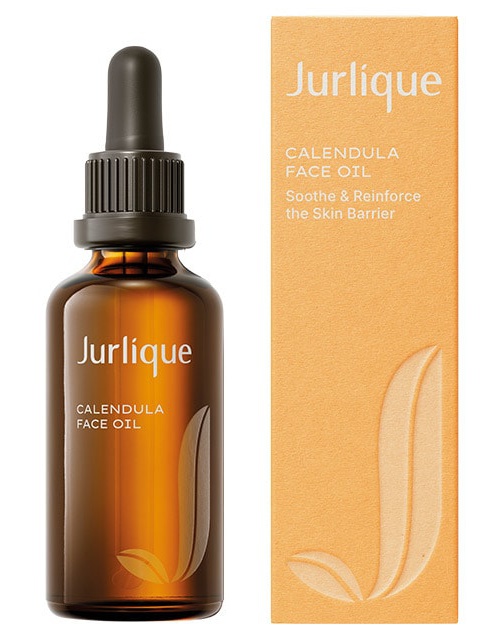
Ingredients overview
 INCI photo pending approval
Highlights
Key Ingredients
Skim through
| Ingredient name | what-it-does | irr., com. | ID-Rating |
|---|---|---|---|
| Helianthus Annuus (Sunflower) Seed Oil | emollient | 0, 0 | goodie |
| Coco-Caprylate/Caprate | emollient | ||
| Caprylic/Capric Triglyceride | emollient | ||
| Limnanthes Alba (Meadowfoam) Seed Oil | emollient | goodie | |
| Salvia Hispanica Seed Oil | antioxidant, emollient, moisturizer/humectant | goodie | |
| Glycine Soja (Soybean) Oil | emollient, perfuming | 0, 3 | goodie |
| Fragrance (Parfum) | perfuming | icky | |
| Tocopherol | antioxidant | 0-3, 0-3 | goodie |
| Calendula Officinalis Flower Extract | soothing, antioxidant, perfuming | goodie | |
| Leptospermum Scoparium Leaf Extract | |||
| Althaea Officinalis Root Extract | |||
| Lavandula Angustifolia (Lavender) Flower Extract | surfactant/cleansing | ||
| Rosa Gallica Flower Extract | |||
| Beta-Carotene | |||
| Daucus Carota Sativa (Carrot) Root Extract* | antioxidant, emollient | goodie |
Jurlique Calendula Face OilIngredients explained
Sunflower does not need a big intro as you probably use it in the kitchen as cooking oil, or you munch on the seeds as a healthy snack or you adore its big, beautiful yellow flower during the summer - or you do all of these and probably even more. And by even more we mean putting it all over your face as sunflower oil is one of the most commonly used plant oils in skincare.
It’s a real oldie: expressed directly from the seeds, the oil is used not for hundreds but thousands of years. According to The National Sunflower Association, there is evidence that both the plant and its oil were used by American Indians in the area of Arizona and New Mexico about 3000 BC. Do the math: it's more than 5000 years – definitely an oldie.
Our intro did get pretty big after all (sorry for that), so let's get to the point finally: sunflower oil - similar to other plant oils - is a great emollient that makes the skin smooth and nice and helps to keep it hydrated. It also protects the surface of the skin and enhances the damaged or irritated skin barrier. Leslie Bauman notes in Cosmetic Dermatology that one application of sunflower oil significantly speeds up the recovery of the skin barrier within an hour and sustains the results 5 hours after using it.
It's also loaded with fatty acids (mostly linoleic (50-74%) and oleic (14-35%)). The unrefined version (be sure to use that on your skin!) is especially high in linoleic acid that is great even for acne-prone skin. Its comedogen index is 0, meaning that it's pretty much an all skin-type oil.
Truth be told, there are many great plant oils and sunflower oil is definitely one of them.
A light emollient ester (C8-10 fatty acids connected to C12-18 fatty alcohols) that absorbs quickly and leaves a dry but silky finish on the skin. In terms of skin feel, it is similar to Dicaprylyl Carbonate, another commonly used light emollient.
A super common emollient that makes your skin feel nice and smooth. It comes from coconut oil and glycerin, it’s light-textured, clear, odorless and non-greasy. It’s a nice ingredient that just feels good on the skin, is super well tolerated by every skin type and easy to formulate with. No wonder it’s popular.
The emollient plant oil coming from the seeds of the white flowering plant called meadowfoam. Meadowfoam Oil has a unique fatty acid composition with 95% of it being long chain fatty acids (eicosenoic acid C20:1 - 61%, docosenoic acid C22:1 - 16% and docosadienoic acid C22:2 - 18%) that make the oil extraordinarily stable. It also contains antioxidant components such as vitamin E as well as phytosterols.
Apart from Meadowfoam Oil's crazy stability, the oil is described as non-greasy, rapidly absorbed and having a similar skin feel to more often used jojoba oil. The oil is ideal for products where a soft, smooth, silky feel is required whether it be on skin or hair.
Chia seeds are in fashion and there is a reason for that. They are not only a superfood for your body but putting the oil all over your face seems to be a good idea too.
Its unique property is that it's the richest known botanical source of skin moisturizing and probably anti-inflammatory alpha-linolenic acid (contains 50-60%). It also contains barrier repairing linoleic acid (17-26%) and only a small amount of very nourishing but potentially acne causing oleic acid (7%).
Thanks to its great fatty acid content, chia seed oil counts as a great skin hydrator and it can help to maintain a healthy skin barrier function. According to manufacturer's info, it can even alleviate itchy skin. If that is not enough, it also contains a couple of nice antioxidants, including Alpha-Lipoic Acid, Coumaric and Caffeic Acid.
All in all, a nice plant oil with a unique fatty acid composition and some nice antioxidants.
The emollient plant oil coming from the soybean. It is considered to be a nice, cost-effective base oil with moisturizing properties. As for its fatty acid profile, it contains 48-59% barrier-repairing linoleic acid, 17-30% nourishing oleic acid and also some (4.5-11%) potentially anti-inflammatory linolenic acid.
Exactly what it sounds: nice smelling stuff put into cosmetic products so that the end product also smells nice. Fragrance in the US and parfum in the EU is a generic term on the ingredient list that is made up of 30 to 50 chemicals on average (but it can have as much as 200 components!).
If you are someone who likes to know what you put on your face then fragrance is not your best friend - there's no way to know what’s really in it.
Also, if your skin is sensitive, fragrance is again not your best friend. It’s the number one cause of contact allergy to cosmetics. It’s definitely a smart thing to avoid with sensitive skin (and fragrance of any type - natural is just as allergic as synthetic, if not worse!).
- Primary fat-soluble antioxidant in our skin
- Significant photoprotection against UVB rays
- Vit C + Vit E work in synergy and provide great photoprotection
- Has emollient properties
- Easy to formulate, stable and relatively inexpensive
The extract coming from the popular garden plant Calendula or Marigold. According to manufacturer info, it's used for many centuries for its exceptional healing powers and is particularly remarkable in the treatment of wounds. It contains flavonoids that give the plant anti-inflammatory and antioxidant properties.
 We don't have description for this ingredient yet.
We don't have description for this ingredient yet.
We don't have description for this ingredient yet.
We don't have description for this ingredient yet.
We don't have description for this ingredient yet.
The oil-soluble extract coming from the edible, orange part of the carrot. It is created by macerating the carrot root in a carrier oil such as sunflower or olive oil, and the resulting thing (base oil + carrot root extract) is often called carrot oil or carrot root oil. (Not to be confused with carrot seed oil, that can be fixed or essential and comes from the seeds.)
The root extract is known for containing the orange pigment beta-carotene, aka provitamin A. It is a famous molecule for being a potent antioxidant, suntan accelerator and having skin-regenerative abilities. Carrot oil also contains vitamin E and some fatty acids that give the oil further antioxidant and barrier repairing properties.
You may also want to take a look at...
| what‑it‑does | emollient |
| irritancy, com. | 0, 0 |
| what‑it‑does | emollient |
| what‑it‑does | emollient |
| what‑it‑does | emollient |
| what‑it‑does | antioxidant | emollient | moisturizer/humectant |
| what‑it‑does | emollient | perfuming |
| irritancy, com. | 0, 3 |
| what‑it‑does | perfuming |
| what‑it‑does | antioxidant |
| irritancy, com. | 0-3, 0-3 |
| what‑it‑does | soothing | antioxidant | perfuming |
| what‑it‑does | surfactant/cleansing |
| what‑it‑does | antioxidant | emollient |