






Highlights
Key Ingredients
Other Ingredients
Skim through
| Ingredient name | what-it-does | irr., com. | ID-Rating |
|---|---|---|---|
| Grape Seed Oil | antioxidant, emollient | goodie | |
| Aloe Vera | soothing, moisturizer/humectant | goodie | |
| Pomegranate Oil | antioxidant, emollient | goodie | |
| Carrot Seed Oil | emollient | ||
| Lemon Oil | perfuming | icky | |
| Frankincense Oil | |||
| Turmeric | antioxidant, soothing, skin brightening, perfuming | goodie | |
| Kojic Acid | antioxidant, skin brightening | goodie |
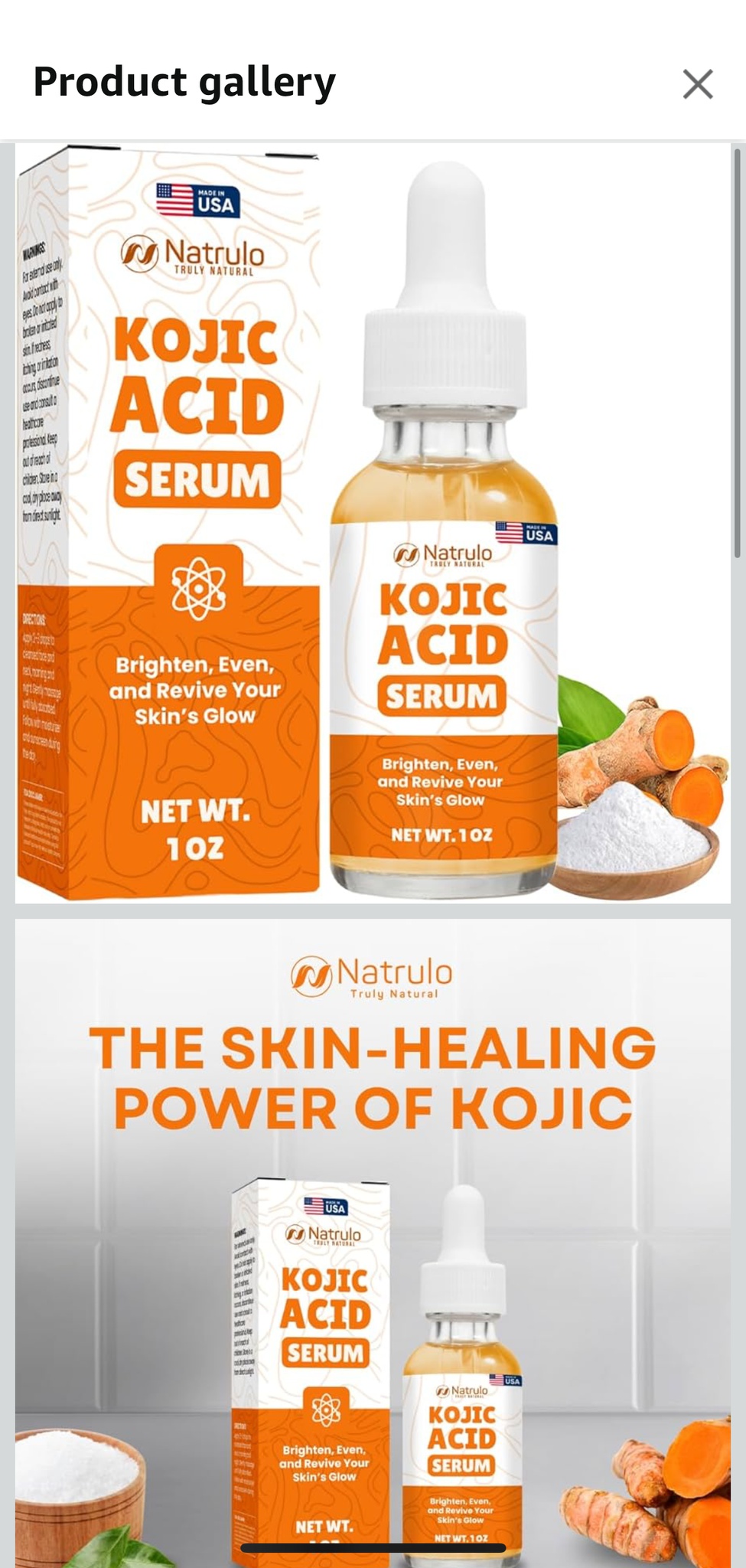
Natrulo Kojic Acid SerumIngredients explained
A goodie plant oil coming from the polyphenol-rich seeds of the grape. It's a light emollient oil that makes your skin feel smooth and nice and also contains a bunch of good-for-the-skin stuff. It's a great source of antioxidant polyphenols, barrier repair fatty acid linoleic acid (about 55-77%, while oleic acid is about 12-27%) and antioxidant, skin-protectant vitamin E.
Aloe Vera is one of today’s magic plants. It does have some very nice properties indeed, though famous dermatologist Leslie Baumann warns us in her book that most of the evidence is anecdotal and the plant might be a bit overhyped.
What research does confirm about Aloe is that it’s a great moisturizer and has several anti-inflammatory (among others contains salicylates, polysaccharides, magnesium lactate and C-glucosyl chromone) as well as some antibacterial components. It also helps wound healing and skin regeneration in general. All in all definitely a goodie.
The emollient plant oil coming from the seeds of Pomegranate. The red fruit has lots of seeds (100-200 per fruit), but 7 kg of them are needed for 1 kg of oil. Among the many similar plant oils, Pomegranate oil is a really unique one, as its main fatty acid (60%) is a rare one called punic acid, a so-called conjugated fatty acid with three double bonds. It also contains the common linoleic (2-10%) and oleic acids (3-12%), but only in small amounts.
Punic acid is thought to be a biologically active compound, a powerful anti-inflammatory, and antioxidant agent. The oil itself is also claimed to have strong antioxidant properties as well as having excellent nourishing and moisturizing abilities. On top of that, we also found a research that examined Pomegranate as a cosmeceutical source and it concluded that the seed oil can nicely promote the regeneration of the epidermis (the top layer of the skin).
The oil coming from the seeds of the carrot, the orange root vegetable we all know and eat regularly. This oil is a really tricky one, as it can refer to two types of oil that can both be extracted from the carrot seeds: the essential oil (about 0.83% yield) and the fixed oil (about 7.84% yield).
The two seed oils are very different and to make matters even worse these two oils are also very different from carrot root oil, or carrot oil, that is basically carrot root extract macerated in a carrier oil such as sunflower or olive oil and is the one that contains the vitamin A precursor, carotene.
Let's start with the fixed oil: it's a nice emollient plant oil that is loaded with moisturizing fatty acids (petroselinic acid - 60% and linoleic acid - 12% are the main ones). Other important components are carotol (30%) and daucol (12%) that give the seed oil antifungal and antioxidant properties. Browsing cosmetic manufacturer info, the oil is also often described as revitalizing, toning and stimulating.
As for the essential oil, it is a light yellow colored oil with a rich, spicy and earthy fragrance. Its main component is carotol (about 65%) but similar to other essential oils, it is a chemically complex mixture with lots of compounds in small amounts. The essential oil also has antifungal and antioxidant properties but also contains fragrant components that might irritate sensitive skin types.
The essential oil coming from the rind of the lemon that we make (or should make) lemonade from. In general, there are two problems with citrus peel oils: first, they are essentially the fragrant component, limonene in disguise (they are about 85-98% limonene).
Second, they contain the problematic compounds called furanocoumarins that make them mildly phototoxic. Lemon peel contains a medium amount of them, more than sweet orange but less than bergamot. Be careful with it especially if it is in a product for daytime use.
 We don't have description for this ingredient yet.
Turmeric is the yellow spice you probably know from curry and Indian food. It's also a traditional herbal medicine used in Ayurveda for its bunch of anti-something magic abilities including being anti-inflammatory, antimicrobial, antioxidant and anticarcinogenic.
As for turmeric and skincare, we have good news: studies show that the root extract and its main biologically active component, curcumin can do multiple good things for the skin. Thanks to its anti-inflammatory and antimicrobial activity, it shows some promise for acne-prone skin and a small study from 2013 showed that it might be able to regulate sebum production.
It's also a potent antioxidant and skin-brightening agent so it often shows up in anti-aging and/or radiance-boosting products.
We don't have description for this ingredient yet.
You may also want to take a look at...
| what‑it‑does | antioxidant | emollient |
| what‑it‑does | soothing | moisturizer/humectant |
| what‑it‑does | antioxidant | emollient |
| what‑it‑does | emollient |
| what‑it‑does | perfuming |
| what‑it‑does | antioxidant | soothing | skin brightening | perfuming |
| what‑it‑does | antioxidant | skin brightening |