





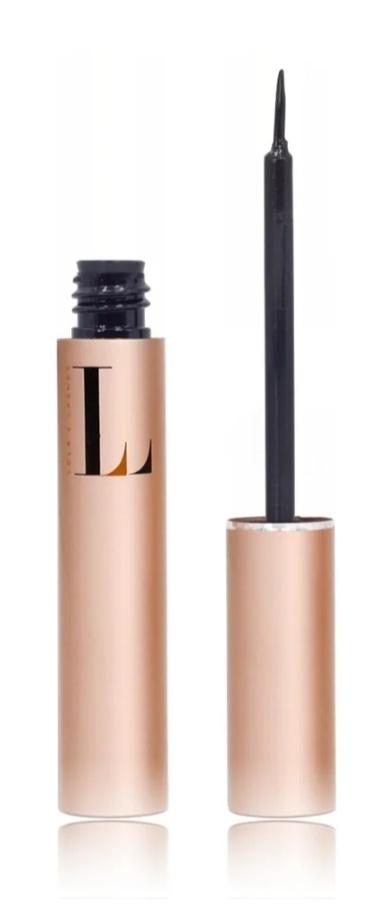
Magnetic Eyeliner - Classic
Highlights
Skim through
| Ingredient name | what-it-does | irr., com. | ID-Rating |
|---|---|---|---|
| Isododecane | emollient, solvent | ||
| VP/VA Copolymer | |||
| Trimethylsiloxyphenyl Dimethicone | |||
| Phenoxyethanol | preservative | ||
| Diazolidinyl Urea | preservative | icky | |
| Ci 77499 (Iron Oxides) | colorant | 0, 0 |
Lola's Lashes Magnetic Eyeliner - ClassicIngredients explained
A clear, colorless and odorless, highly volatile (meaning it does not absorb into the skin but evaporates from it) liquid that's used as an emollient. It gives a nice non-oily light skin feel and it can improve the slip of the formula without leaving a tacky residue behind.
It's also popular in make-up products as its volatility makes mascaras and foundations last longer. If that would not be enough, it's also an excellent solvent, and it's a regular not only on the ingredients lists of make-ups but also on makeup removers.
A big polymer (created from repeating subunits) molecule that works as a film former and hair fixative agent.
It is a modified version of the first and classic hair fixative, PVP that alternates the water-loving VP (Vinyl Pyrrolidone) units with water-hating VA (Vinyl Acetate) units to create a film that is less brittle and less sensitive to air humidity.
 We don't have description for this ingredient yet.
It’s pretty much the current IT-preservative. It’s safe and gentle, but even more importantly, it’s not a feared-by-everyone-mostly-without-scientific-reason paraben.
It’s not something new: it was introduced around 1950 and today it can be used up to 1% worldwide. It can be found in nature - in green tea - but the version used in cosmetics is synthetic.
Other than having a good safety profile and being quite gentle to the skin it has some other advantages too. It can be used in many types of formulations as it has great thermal stability (can be heated up to 85°C) and works on a wide range of pH levels (ph 3-10).
It’s often used together with ethylhexylglycerin as it nicely improves the preservative activity of phenoxyethanol.
An antimicrobial preservative that helps your products not to go wrong too quickly. It works especially well against bacteria, specifically gram-negative species, yeast, and mold.
Somewhat controversial, it belongs to an infamous family of formaldehyde-releasers. That is, it slowly breaks down to form formaldehyde when it is added to a formula. We have written more about formaldehyde-releasing preservatives and the concerns around them at Dmdm Hydantoin, but do not get too scared, those are more theories than proven facts.
As for Diazolidinyl Urea itself, a study from 1990 writes that at concentrations up to 0.4%, it was a mild cumulative skin irritant, but the CIR (Cosmetic Ingredient Review) reviewed it in 2006 and found that, in concentrations of <0.5%, it is safe as used, as the amount of formaldehyde released will be smaller than the recommended limit (of less than 0.2%).
All in all, it is up to your personal decision and skin sensitivity.
Black Iron Oxide is the super common inorganic (as in no carbon atom in the molecule) pigment that controls the darkness of your foundation or gives the blackness to your mascara. Blended with red and black iron oxides, it is essential in all "flesh-toned" makeup products.
Chemically speaking, it is a mixture of iron II and iron III oxide. Btw, this guy, unlike the yellow and red pigments, is magnetic.
You may also want to take a look at...
| what‑it‑does | emollient | solvent |
| what‑it‑does | preservative |
| what‑it‑does | preservative |
| what‑it‑does | colorant |
| irritancy, com. | 0, 0 |